
The Pirate, the Frontiersman, and the Lost Texas Silver Mine

The Pirate, the Frontiersman, and the Lost Texas Silver Mine
The San Saba River cuts through limestone Hill Country about 120 miles northwest of San Antonio. The cedar and live oak go on forever. The sky is enormous. It looks like a thousand other stretches of Texas backcountry — the kind you pass through on the way somewhere else.
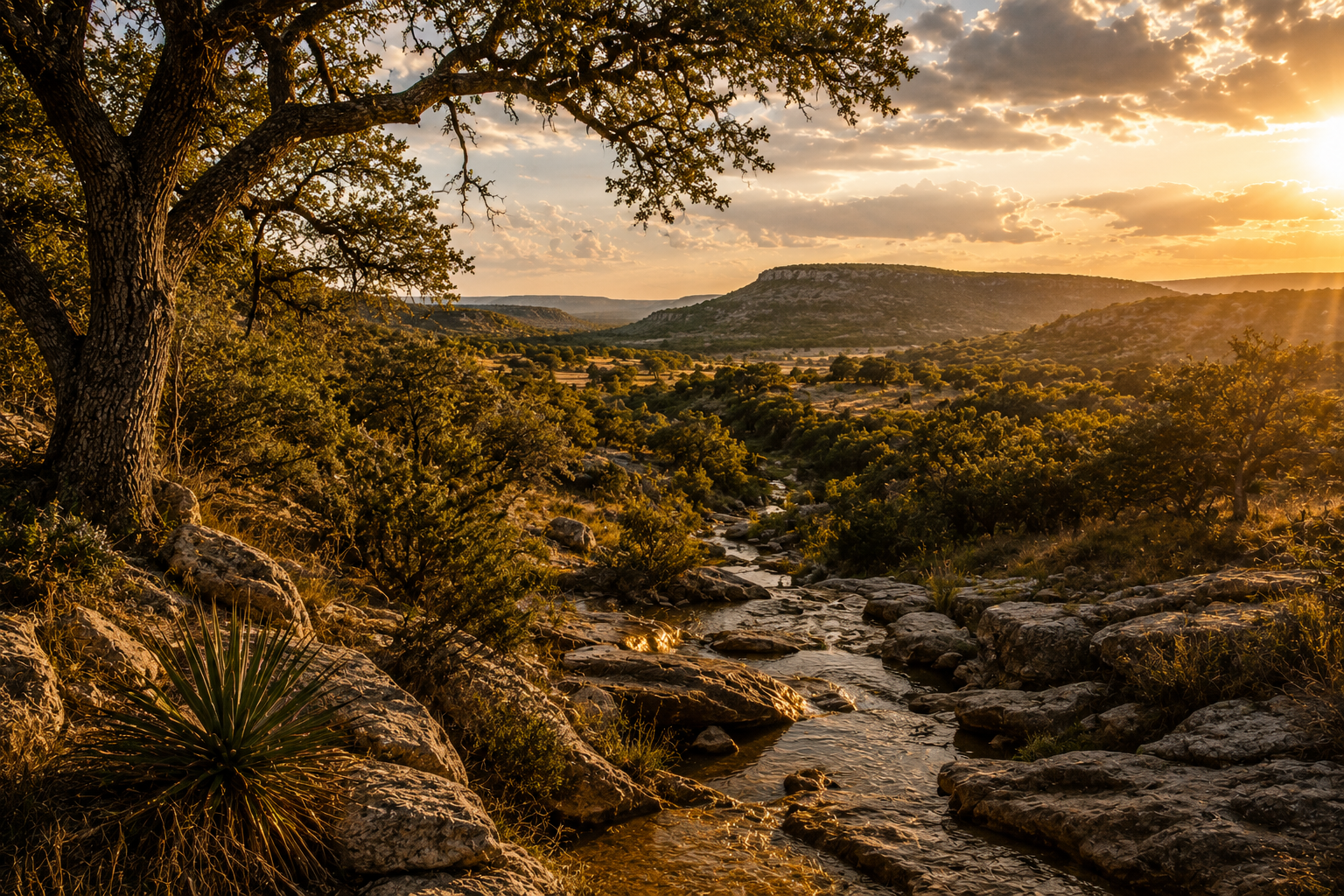
Somewhere in that country is a silver mine that Spanish missionaries worked in the 1700s, that the Lipan Apache knew about and kept secret, that Jim Bowie nearly died trying to find in 1831, and that nobody has found since.
Bowie knew where to look because he’d been told. He’d been told because he’d spent years in the company of the most well-connected outlaw on the Gulf Coast.
The Man Who Ran the Gulf
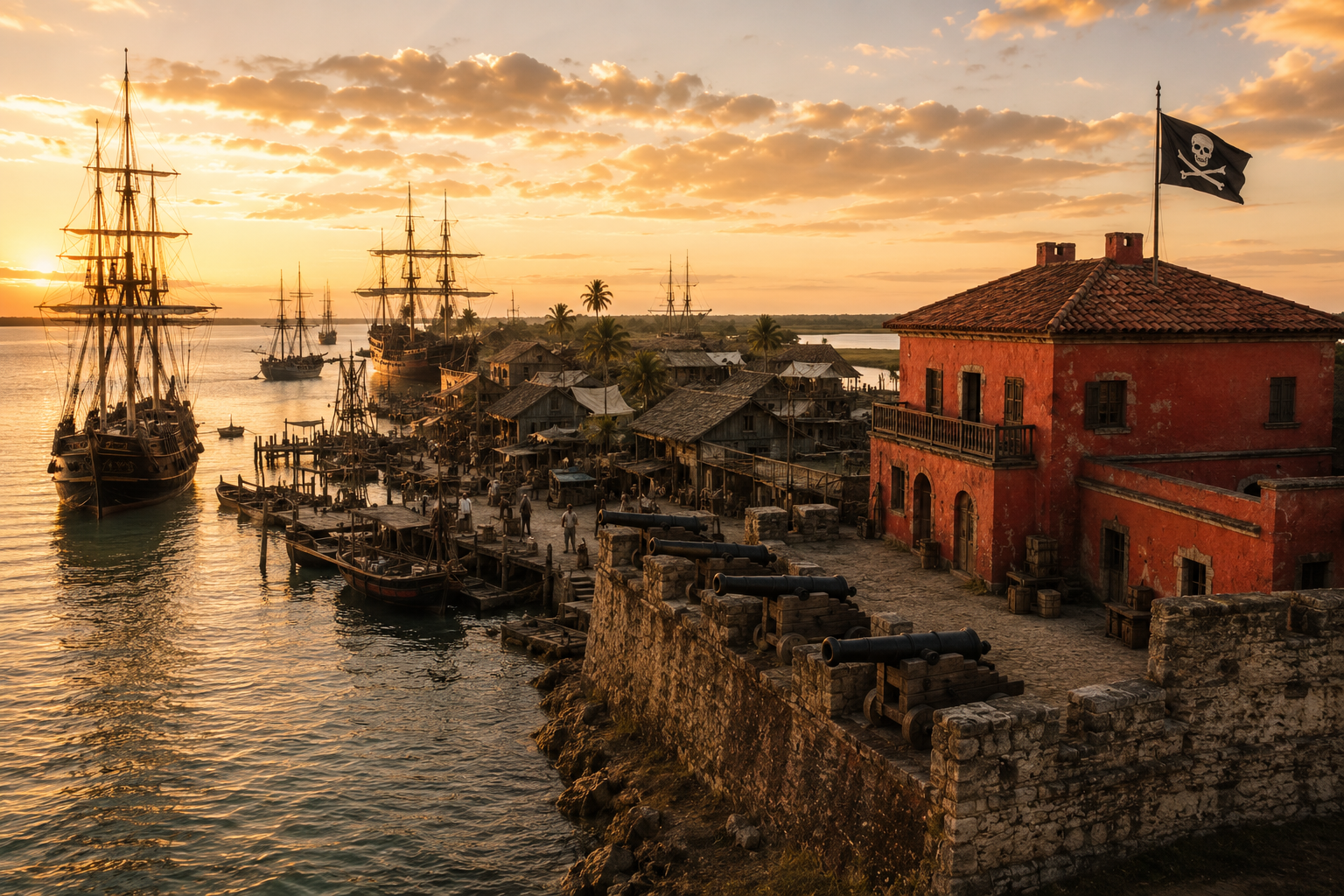
From 1817 to 1821, Jean Lafitte ran a colony on Galveston Island he called Campeche. At its peak it held over a thousand people — sailors, smugglers, merchants, and men who didn’t ask too many questions about where cargo came from. His headquarters, the Maison Rouge, was a two-story red house with cannon batteries facing the harbor.
Lafitte operated as a privateer — technically legal, carrying letters of marque from the crumbling Republic of Mexico to prey on Spanish shipping. In practice he took what he could and sold it to whoever was buying. His network ran from the Caribbean to New Orleans, and his intelligence on the Gulf was unmatched.
He had helped Andrew Jackson win the Battle of New Orleans in January 1815, which bought him a presidential pardon and a clean slate — briefly. The US Navy burned Barataria Bay in 1814 and eventually forced him off Galveston in 1821. After that, Lafitte vanished. Official records say he died off Honduras in 1823. Nobody has confirmed it. If you’ve read Charlie’s piece on Lafitte’s Texas connection, you know why local legend on the Lamar Peninsula has always had a different theory.
But before Lafitte disappeared, a young Louisiana land speculator named Jim Bowie came to do business with him.
The Business Deal
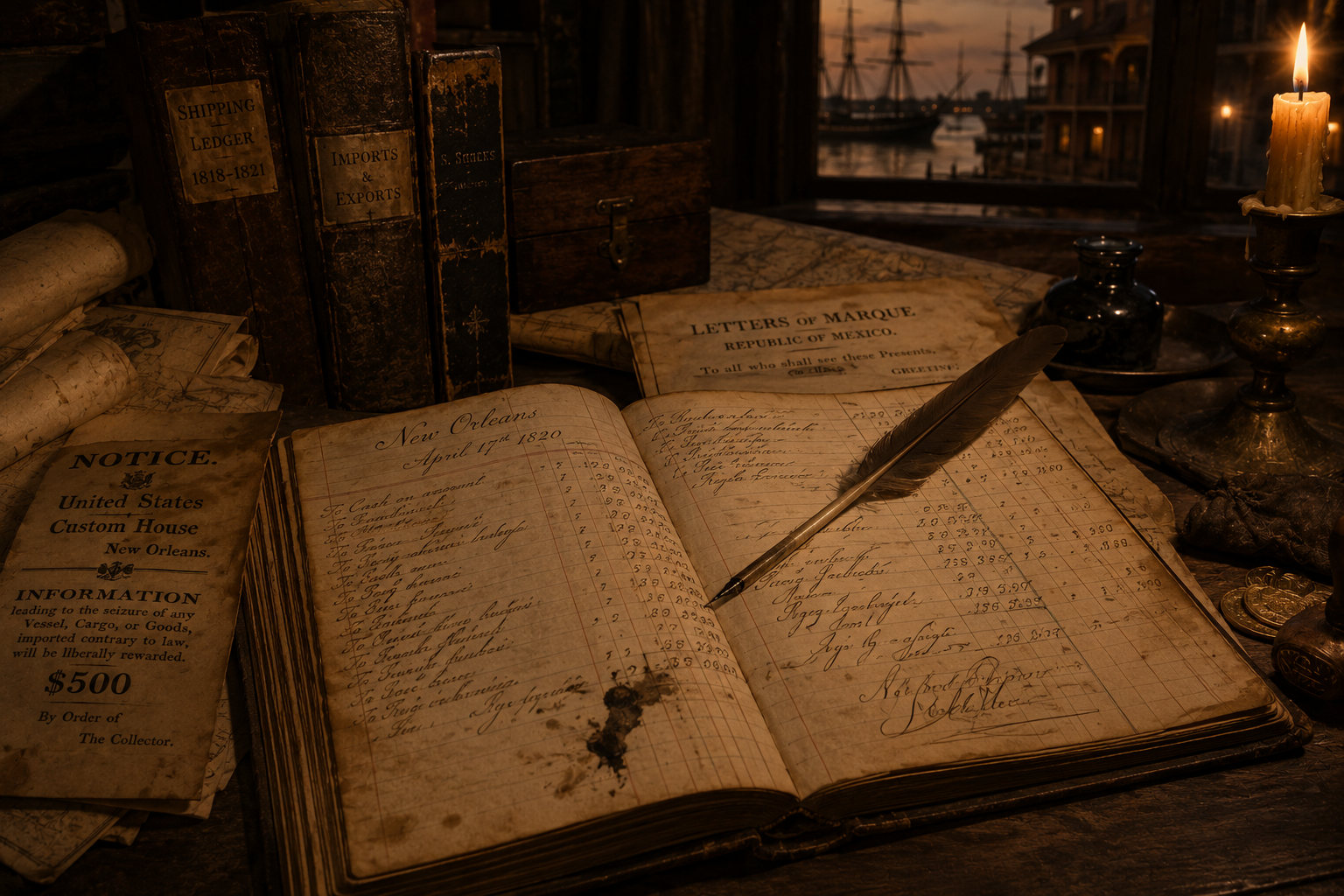
This part is documented history, not legend.
The United States banned the importation of enslaved people on January 1, 1808 — one of the earliest anti-importation laws in the hemisphere. Napoleon had already sold Louisiana in 1803. Spain held Florida until 1821 and controlled Texas as New Spain until Mexican independence in 1821. The international slave trade operating in the Gulf of Mexico was a Spanish, French, and Portuguese enterprise. The geography matters: New Orleans, Galveston, and the Gulf Coast were frontier borderlands where three empires’ legal systems overlapped and enforcement was thin.
Into that gap stepped Lafitte’s network and the Bowie brothers — Jim, Rezin, and John.
The scheme worked like this: Lafitte’s operation would bring enslaved people captured at sea to the Texas coast. The Bowie brothers would purchase them, march them to New Orleans, and report them to US customs as smuggled contraband. Under the 1808 law, informants received a $500 per person reward. The government would auction the enslaved people — and the Bowie brothers, as the only parties who knew the auction was happening, would buy them back at the $500 reserve price. They would then sell them in the Natchez markets for $800 to $1,000 each.
The Bowie brothers reportedly cleared $65,000 from this arrangement — roughly a million and a half dollars in today’s money. It was enough to fund the next chapter entirely.
Jim Bowie used that money to move west.
The Move to Texas
In the late 1820s, Bowie arrived in Texas — then the northern territory of the new Republic of Mexico. He converted to Catholicism, became a Mexican citizen, and in 1831 married Ursula de Veramendi, daughter of Juan Martín de Veramendi, the Vice Governor of the state of Coahuila y Texas. He was now family to Mexican royalty.
He was also a land speculator on a massive scale, acquiring hundreds of thousands of acres through a combination of legal grants, questionable paperwork, and the kind of frontier maneuvering that characterized the era. He was fluent in Spanish and Comanche sign language. He was well-liked by the Lipan Apache leaders who had learned, over generations, to be careful about who they trusted with certain information.
One piece of information in particular.
Los Almagres
The Spanish called it Los Almagres — the red ochre mines. Before the missionaries arrived, the Lipan Apache had worked silver deposits in the San Saba River valley. The Presidio de San Sabá was established in 1757 to guard the nearby mission. In 1758, Comanche and allied warriors burned the mission and killed the priests. The presidio held but the Spanish effectively abandoned the silver operation.
The mine location survived in Apache oral tradition and in Spanish documents. By the time Bowie arrived in Texas, the location had become legendary — the Lost San Saba Mine, also called the Bowie Mine, already associated with his name before he ever looked for it.
In November 1831, Bowie led an expedition of about 11 men into the Hill Country to find it.
The Battle of Calf Creek
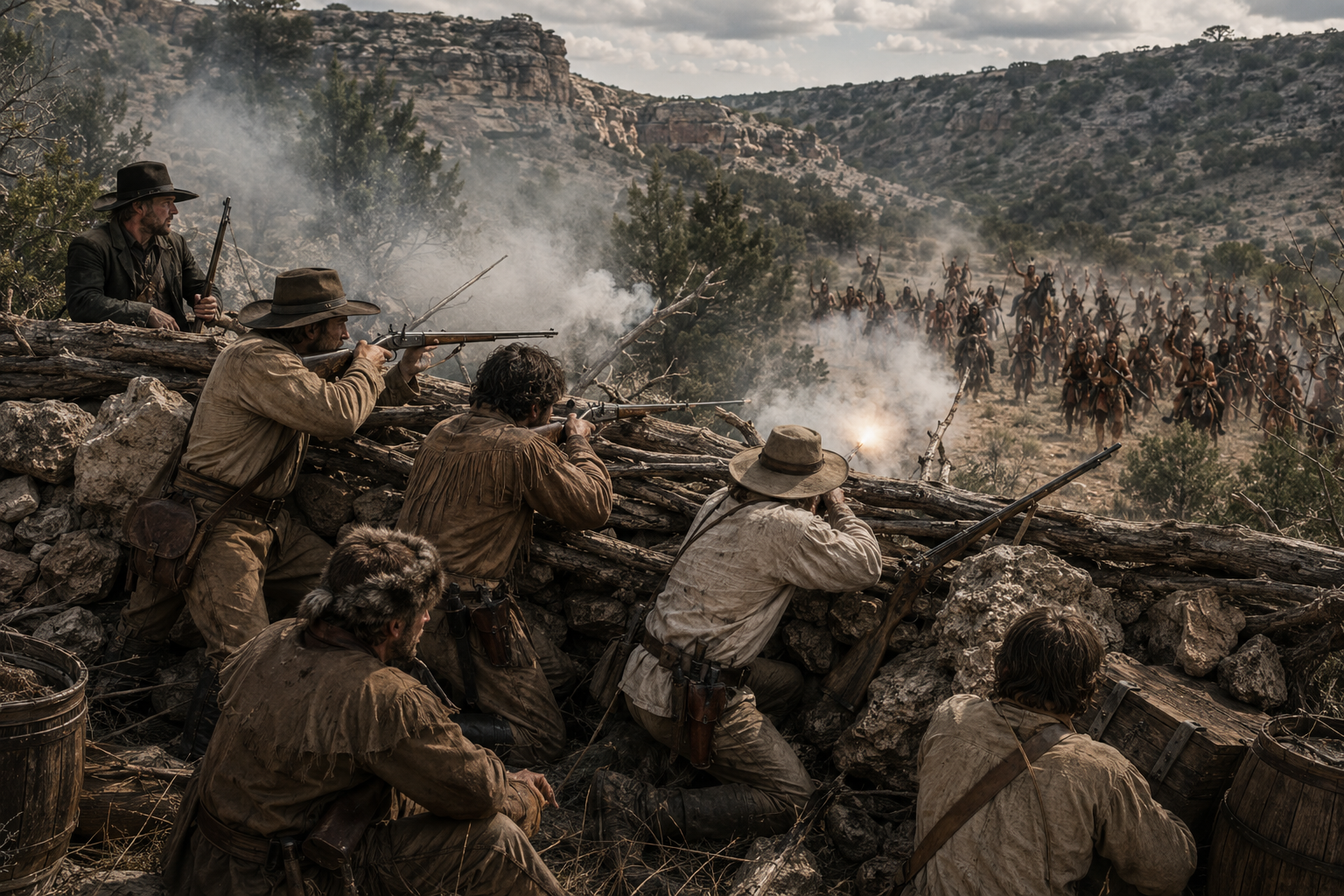
Near what is now Brady, Texas in McCulloch County, Bowie’s party was spotted by a large force of Tawakoni and Waco warriors — estimates range from 160 to 180 men. Against eleven.
What followed was a 13-hour defensive battle from a position near a waterhole. The Bowie party fought from behind whatever cover they could find — logs, rocks, a dry creek bank. By the time the warriors withdrew at nightfall, Bowie’s men had held. Several were wounded. None were killed.
The Battle of Calf Creek became the stuff of Texas legend — and it ended the expedition. Bowie returned to San Antonio without the mine. He knew roughly where it was. He intended to go back.
He never did.
The Alamo
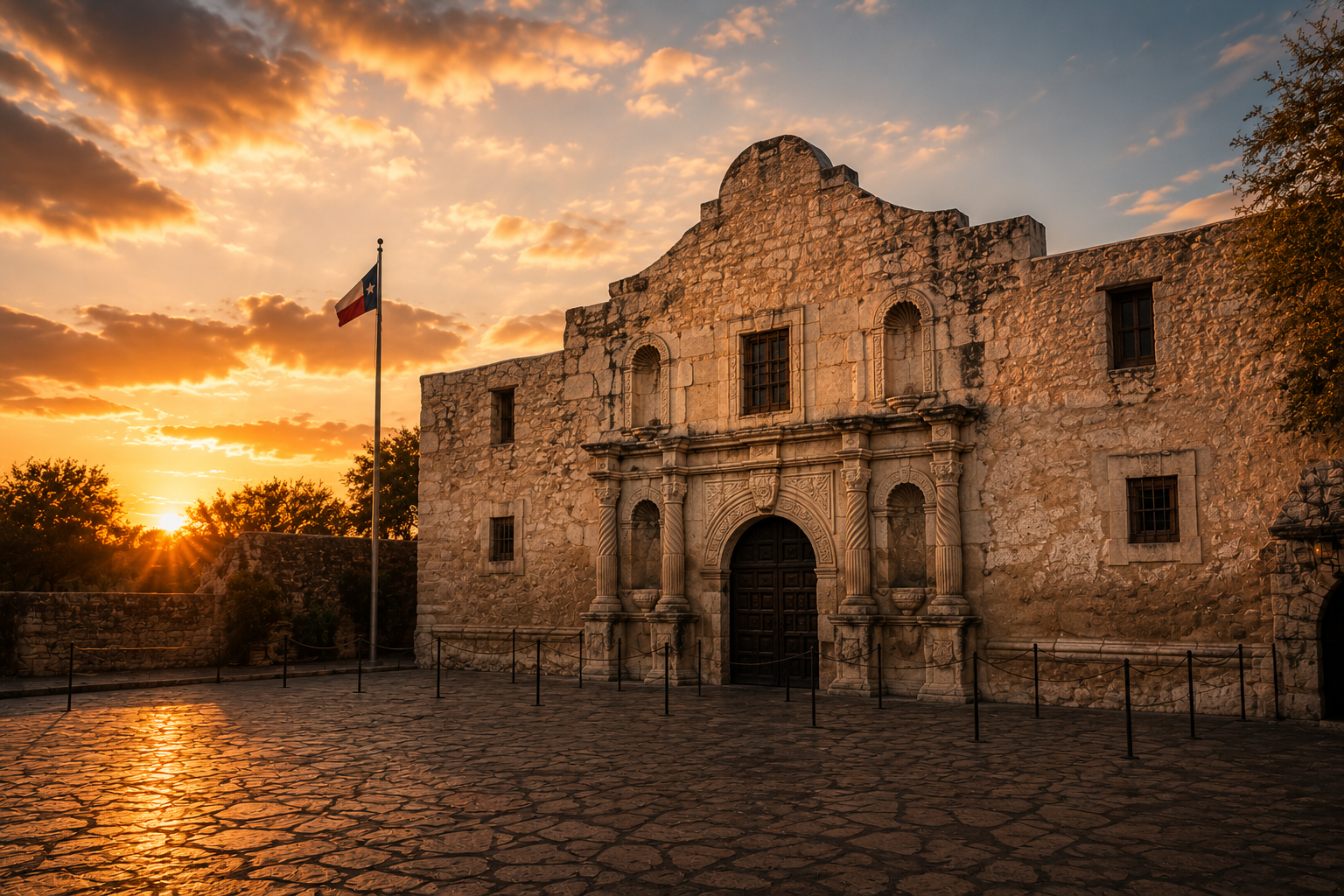
In 1833, Ursula de Veramendi and the Bowie children died of cholera in Monclova while Bowie was away on business. He never fully recovered from it. He drank heavily. He took increasingly reckless risks.
By 1835, the Texas Revolution was accelerating. Bowie arrived at the Alamo in San Antonio in January 1836, co-commanding the garrison with William Barret Travis. He was already gravely ill — typhoid fever, or possibly pneumonia, or both. By the time Santa Anna’s army arrived in February, Bowie was bedridden.
He died there on March 6, 1836, during the final assault. He was 39. The mine location, whatever he knew precisely, went with him.
What’s Still Out There
The San Saba River valley in Menard County, Texas is real outdoor country — limestone canyons, cedar brakes, the Llano Uplift geology that makes the Hill Country look unlike anything else in the state. The old Presidio de San Sabá ruins are still visible outside Menard. The San Saba River is floatable by kayak in good water years.
People still search for Los Almagres. They’ve been searching since before the Civil War. The documented Spanish records describe the mine’s location in terms of landmarks that still exist — river bends, springs, specific hilltops. Serious researchers have narrowed it to a few square miles of private and public land in the San Saba / Menard / McCulloch county area.
It has never been found.
The Thread
Three connected stories, one stretch of Texas coast and Hill Country:
- Lafitte’s buried gold — Galveston, Mustang Island, possibly the Lamar Peninsula near Rockport. Read the full story: Jean Lafitte’s Texas.
- The 1554 Spanish galleons — three ships loaded with silver and gold coins sitting off Padre Island. Coins still wash up. Metal detectors banned at the national seashore.
- Los Almagres — a silver mine in the Hill Country that Spanish missionaries worked, that the Lipan Apache protected, that Jim Bowie fought 160 warriors to find, and that is still exactly where it always was.
You don’t have to go to the Caribbean to chase pirates. You don’t have to go to the Yucatan to find a lost mine. It’s all within a tank of gas from San Antonio.
The adventure is already here. You just have to go look.
All three Texas treasure sites are connected to real outdoor destinations. The Padre Island coastline is part of Padre Island National Seashore. The San Saba / Menard area is Hill Country BLM and state land. The recovered artifacts from the 1554 fleet are at the Corpus Christi Museum of Science and History — worth the drive. For more of the Indiana Jones meets Regular Joe series: Grand Canyon · Lovelock Cave · Mound Builders.