
Lovelock Cave: The Paiute Story the Archaeology Confirmed
Lovelock Cave: The Paiute Story the Archaeology Confirmed
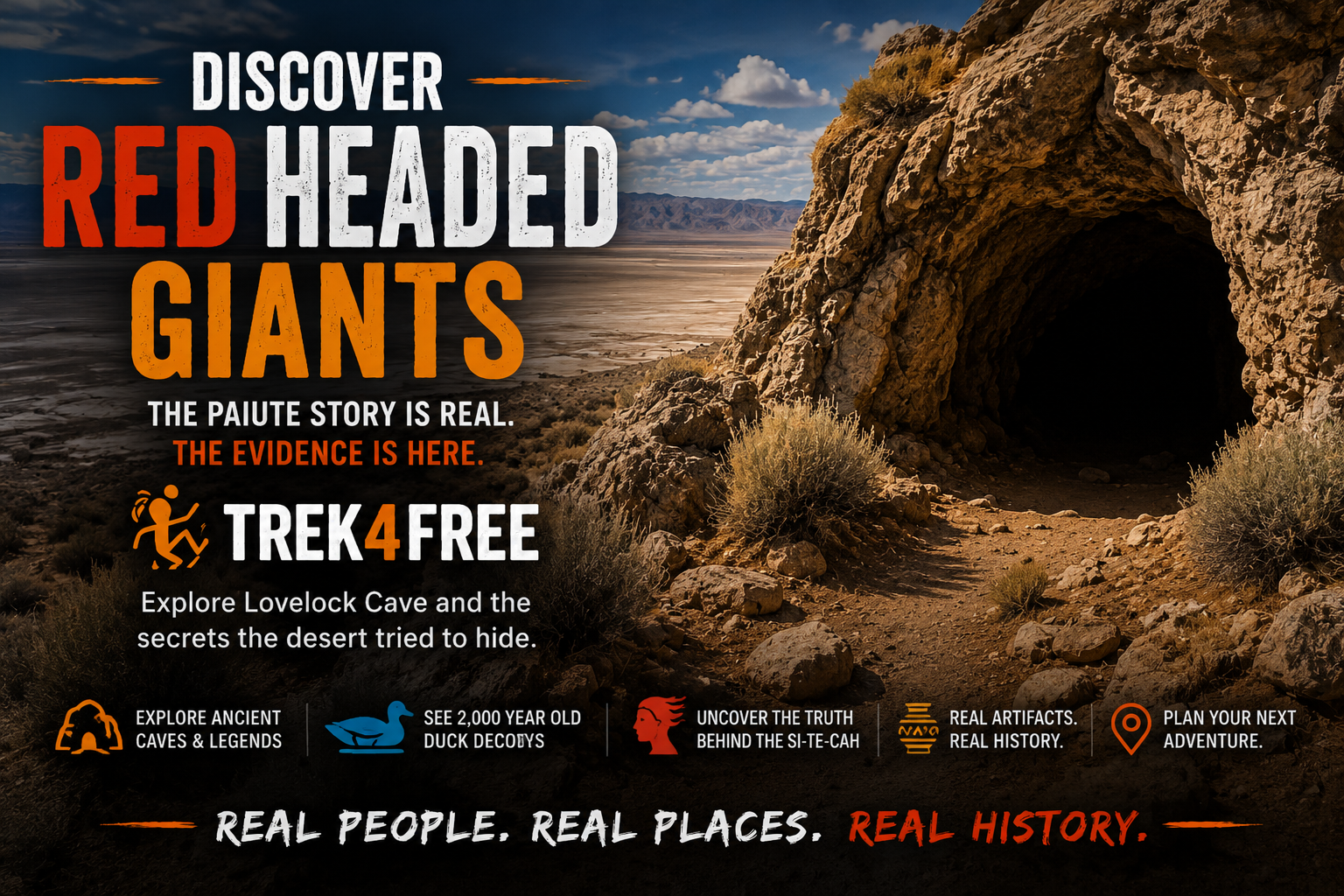
You can drive to this cave. There’s no entry fee, no interpretive sign, no ranger station. It’s a hole in the Nevada desert south of a small town called Lovelock, on Bureau of Land Management land in the Humboldt Sink — the flat alkali basin where the Humboldt River runs out of water and disappears into the ground.
Nothing marks it as significant. Everything about it is.
The Record That Was Already There
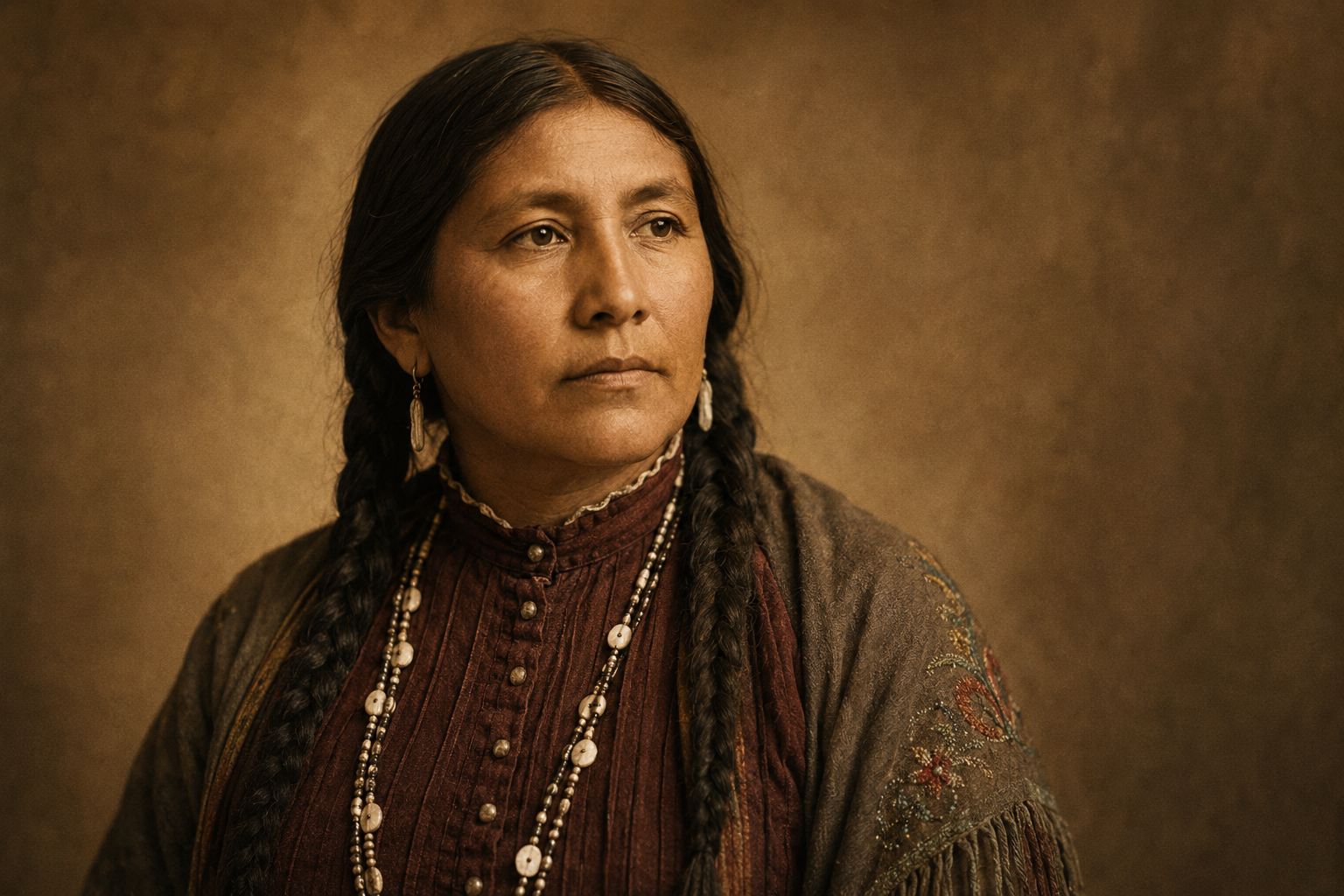
In 1883, a Northern Paiute woman named Sarah Winnemucca published a book called Life Among the Piutes: Their Wrongs and Claims. She was the first Native American woman to publish a book in English. The book was not mythology. It was testimony — a first-person account of Paiute history, culture, and their forced dispossession by the US government.
In it, she described a people called the Si-Te-Cah: red-haired, tall, and by Paiute account cannibalistic — the ancient enemy of the Paiute and neighboring Great Basin tribes. She recorded the oral tradition: that a coalition of tribes tracked the last of the Si-Te-Cah to a cave, piled brush at the entrance, and set it on fire. The Si-Te-Cah were gone after that.
This was 29 years before anyone opened the cave.
What the Archaeologists Found
In 1912, Lovelock Cave was excavated by L.L. Loud of the University of California. A second excavation followed in 1924. What they found inside has been sitting in museum collections ever since.
The duck decoys are the most extraordinary artifact: tule reed decoys, some still with feathers intact, shaped and painted to mimic canvasback ducks. They are among the oldest duck decoys ever discovered anywhere in North America — roughly 2,000 years old. The craft required to make them is not primitive. They are beautiful objects made by people who understood duck behavior with precision that modern hunters would respect.
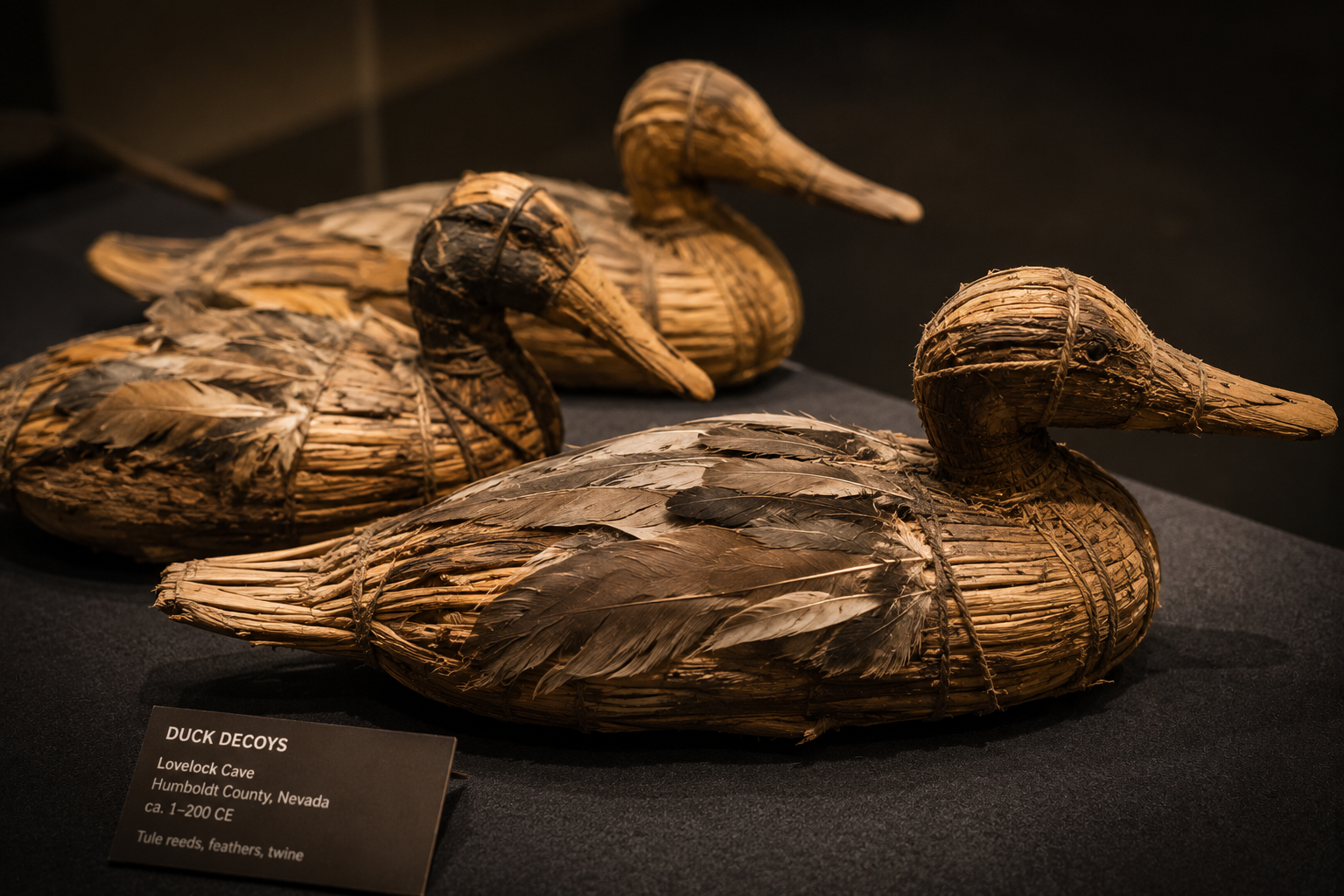
There were also baskets. Tools. Nets. The material evidence of people who knew this basin deeply and had lived in it for a very long time.
And there were mummies with red and auburn hair.
The hair color has been debated for a century. Chemical changes after death can shift dark hair toward red tones — tannins, mineral reactions, time. But the physical record is what it is: red and auburn hair on bodies recovered from the same cave Sarah Winnemucca had already described in 1883.
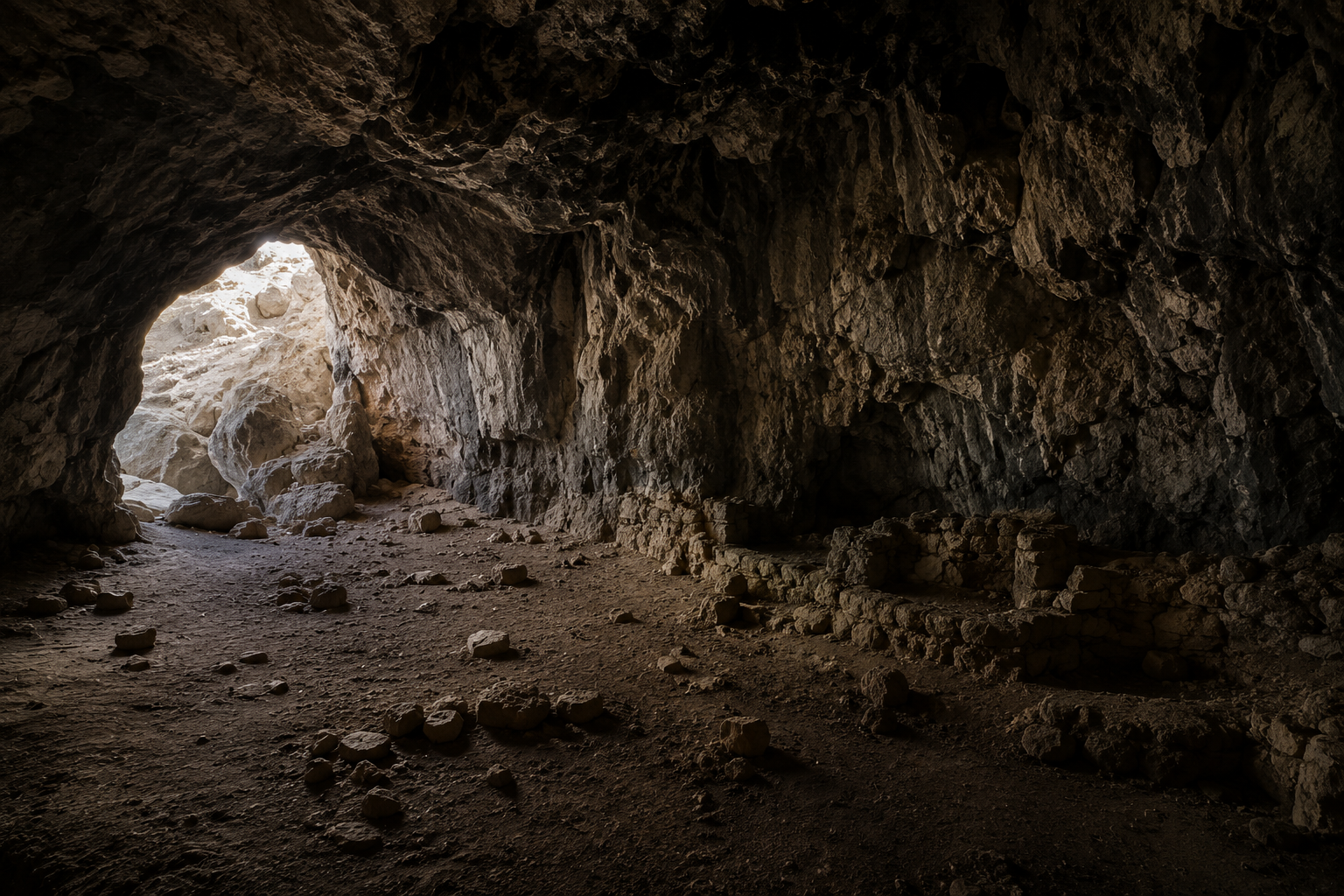
The University of California team also found evidence of fire at the cave entrance. Consistent with the oral tradition they had not yet read.
The Size Question
Early excavation reports noted skeletal remains that measured larger than the regional average. Not uniformly — some normal, some notably large. The reports were documented and then, like similar reports from Ohio Valley mound excavations in the same era, they passed into institutional custody.
The Smithsonian received artifacts from Lovelock Cave. The skeletal record is incomplete. Whether that is the result of institutional disorganization, normal repatriation processes, or something more deliberate is a question without a clean answer. It is the same question that follows similar reports from the Adena and Hopewell mound cultures of Ohio, the Cahokia complex in Illinois, and dozens of other sites where the Smithsonian’s Bureau of American Ethnology was the receiving institution for remains in the late 1800s and early 1900s.
The pattern appears too many times across too many sites to dismiss as coincidence. Whether the explanation is boring (institutional chaos, early measurement errors) or not (deliberate suppression of evidence that doesn’t fit the model), nobody has answered it cleanly.
What’s There Now
The physical artifacts are split between two locations: the Nevada State Museum in Carson City and the small Lovelock Archaeological Museum in town, which holds some of the most accessible original material including duck decoy replicas and excavation photographs.
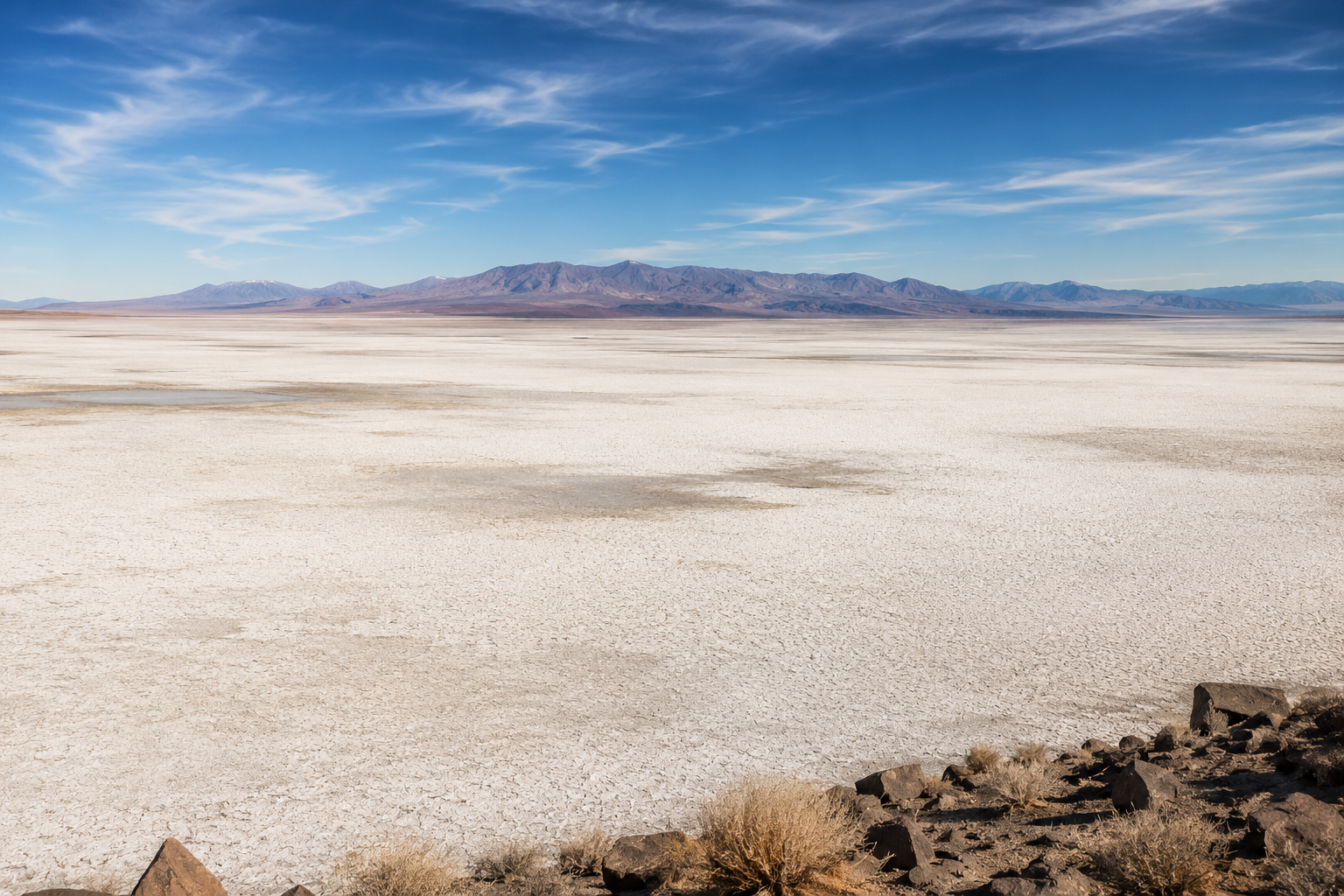
The cave itself is unchanged. BLM land. No fee, no trail, no sign. The Humboldt Sink spreads out around it — flat, white, the color of old bone in dry weather, brilliant blue when the seasonal lake fills. The basin was a wetland for much of the period when people lived in and around this cave. The ducks the decoys were made to lure were real ducks on a real lake that no longer exists.
Why It Matters Beyond Nevada
Lovelock Cave is not an isolated mystery. It is one node in a pattern that stretches from Nevada to the Ohio Valley to the Grand Canyon — oral traditions from multiple distinct Native cultures, physical evidence that corroborates those traditions when it’s examined, and a consistent gap in the institutional record at the point where the evidence should be easiest to verify.
The Paiute said their enemies had red hair and lived in a cave. The archaeology confirmed the cave, the fire, and the red hair. That is more than most ancient mysteries offer.
What it doesn’t resolve is who the Si-Te-Cah were — a different genetic population, an isolated group, the last remnant of an earlier culture? The physical evidence that might answer that question is the same evidence whose institutional trail runs cold.
You can go stand at the entrance to that cave on a Tuesday afternoon and ask the question yourself. No paywall, no guided tour, no reservation required. Just a long drive through the Nevada desert and a place where something happened that nobody has fully explained.
That’s what most of the best places are.
The cave appears on the Trek4Free Caves map — filter for Caves to find it. Our Ancient Sites guide covers the Mound Builder tradition of the Ohio Valley, where the same Smithsonian pattern appears at Serpent Mound and Newark Earthworks. The Grand Canyon mystery runs the same thread through Hopi oral tradition, Egyptian place names, and a 1909 newspaper article nobody has retracted.