Paddling the Devils River: The Purest Water in Texas Comes With Rules
Paddling the Devils River: The Purest Water in Texas Comes With Rules
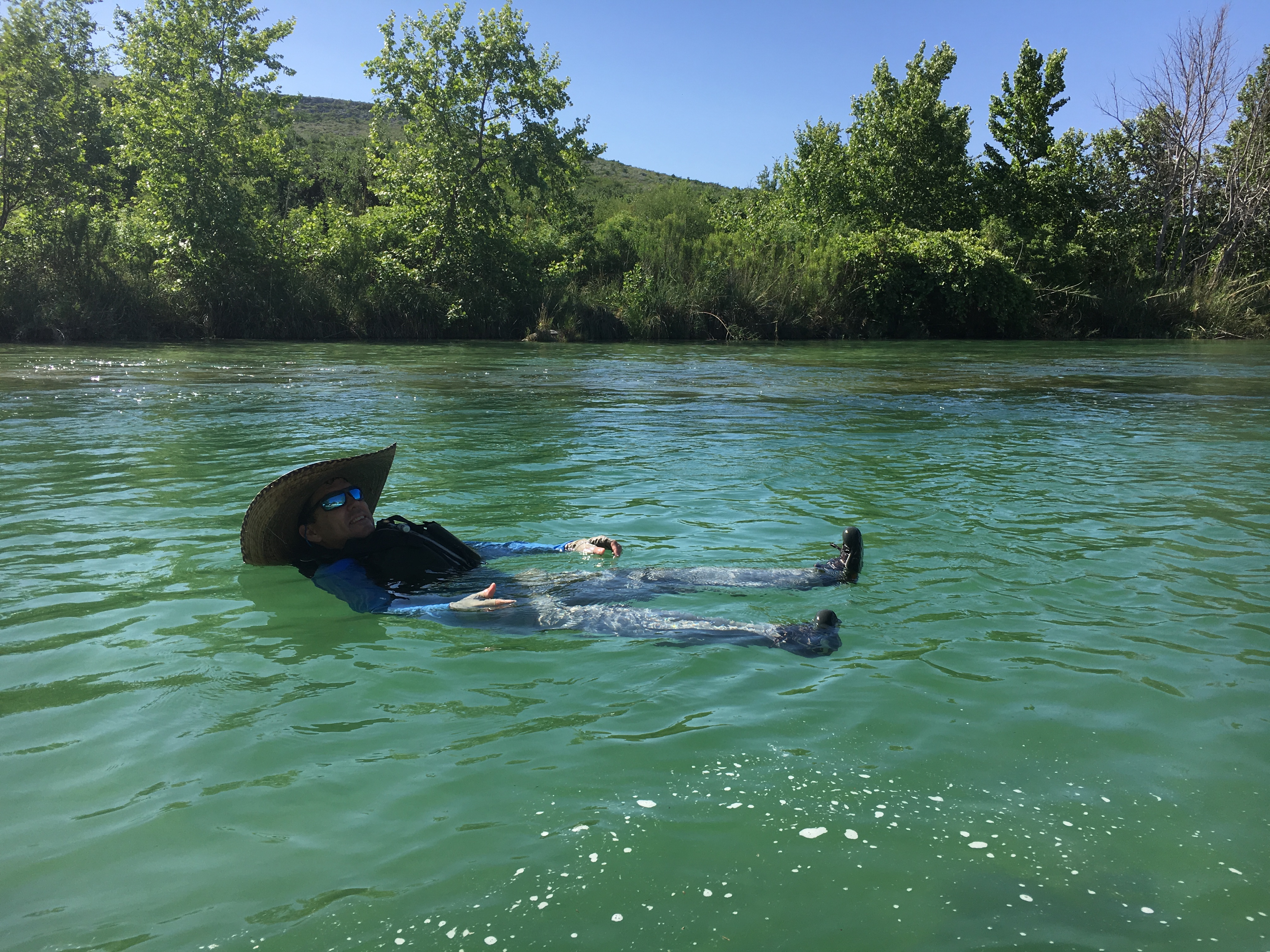
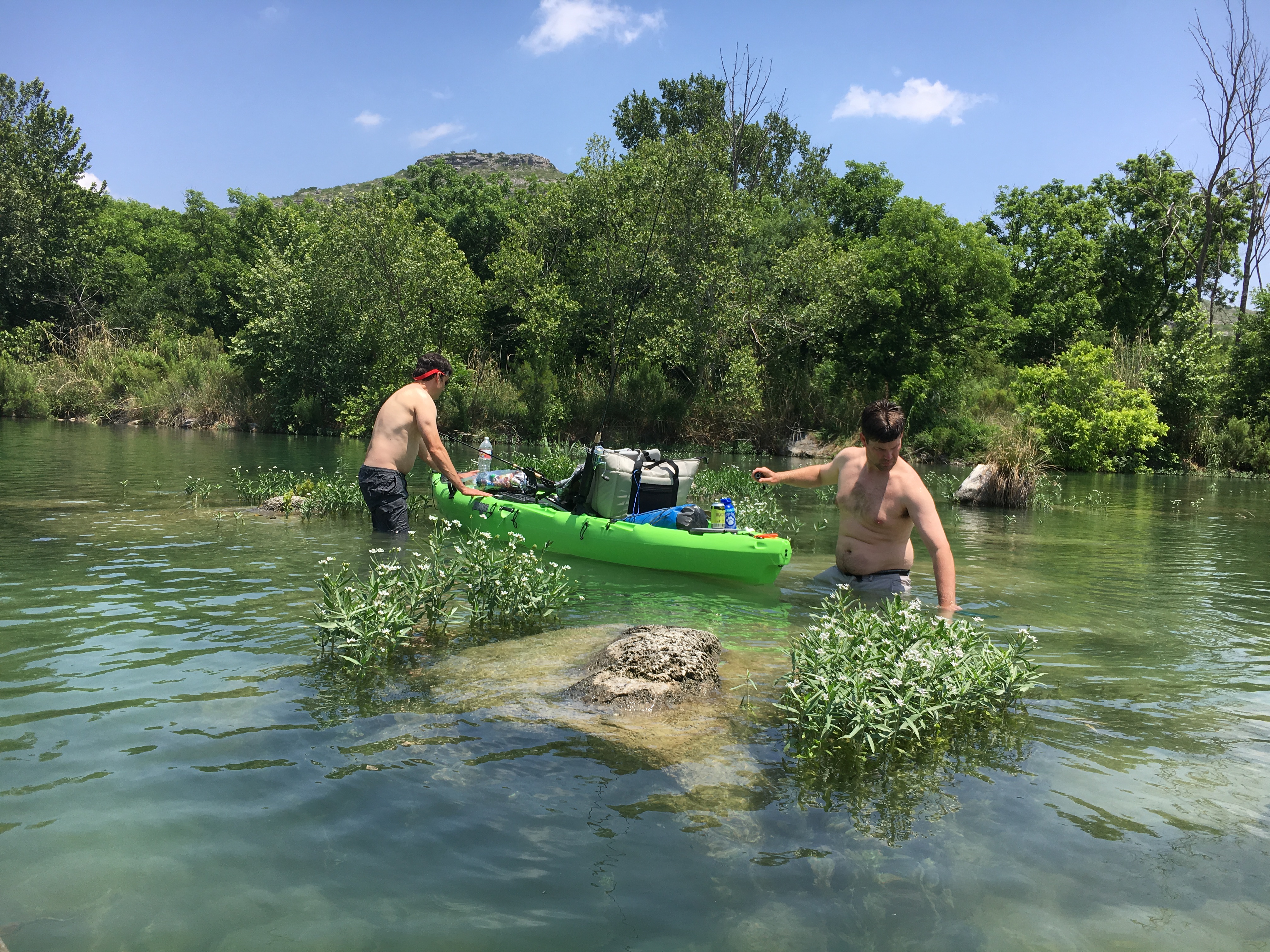
The water is so clear you can read the bottom of the river from your kayak. Not murky-river-clear or Texas-river-clear. I mean you can count individual rocks on the riverbed in eight feet of water. It doesn’t look real.
The Devils River is spring-fed and runs clean off limestone from near Sonora all the way down to Lake Amistad outside Del Rio — about 40 miles of the most pristine water in the state. That’s not a tourism pitch. Texas Parks & Wildlife calls it that, and after spending four days on it with four other guys, I don’t have a better word for it.
I’d tell you to just go. But it’s not that simple. The Devils River has rules. A lot of them. And those rules are the reason the water still looks like that.
What It Takes to Get On the Water
You can’t just show up with a kayak. The river runs through a combination of TPWD-managed land and private property, and access requires a Devils River Access Permit (DRAP) — $10, available through Texas Parks & Wildlife. If you plan to camp at any of the designated paddler camps at river miles 12, 20, and 29, add a reservation and $5 per person per night.
But the rule everyone underestimates is the waste rule. There are no cat holes on the Devils River. WAG bags are required — Waste Alleviation and Gelling Bags — and you carry them out packed into your kayak along with everything else you brought in. Human waste. Sealed bag. Your boat. That’s the deal. No campfires either — not at the paddler camps, not on the river banks, nowhere on TPWD waterfront.
I normally use a 5-gallon bucket for this in camp — it holds the bag open, gives you something stable to sit on, done. Space was critical with a kayak, so I used a Folgers plastic coffee can instead. Wide enough to hold the WAG bag open, light enough to strap to the deck, and it worked perfectly. You can manage liquid separately on the outside of the bag. I know this is not a glamorous topic, but if you’re planning this trip it’s one of the most practical things you need to solve before you launch. Folgers can — highly recommend.
Camping along the river outside the designated camps is limited to the gradient boundary — a narrow strip of public riparian land between the water and the private property lines on both banks. Legal sites within that strip are few and spread out. You need to understand gradient boundary rules before you launch or you’re technically trespassing when you pull off the river for the night.
I’m not saying this to scare you off. I’m saying it because understanding the rules is part of the experience. It’s a permit-controlled river. You’re signing up for a more serious trip than a weekend float down the Guadalupe.
Baker’s Crossing — Devils River Put-In on Trek4Free →
For the shuttle logistics, the take-out at the end of the run is Rough Canyon on Lake Amistad — a primitive NPS campground right next to a boat ramp, open year-round, four sites with covered tables and a comfort station nearby. We staged here before the trip and crashed here when we got off the water. $4 a night. It’s quiet, no crowds, and positioned perfectly for the start and finish of the trip. Drop a vehicle, sleep here, drive to Baker’s Crossing, launch.
Rough Canyon Campground — Amistad NRA on Trek4Free →
Five Guys, Five Different Ways to Purify Water
I went with four other guys. Five people, five different opinions on water purification — which I expected, because that’s how it always goes when you get a group of outdoorsmen together.
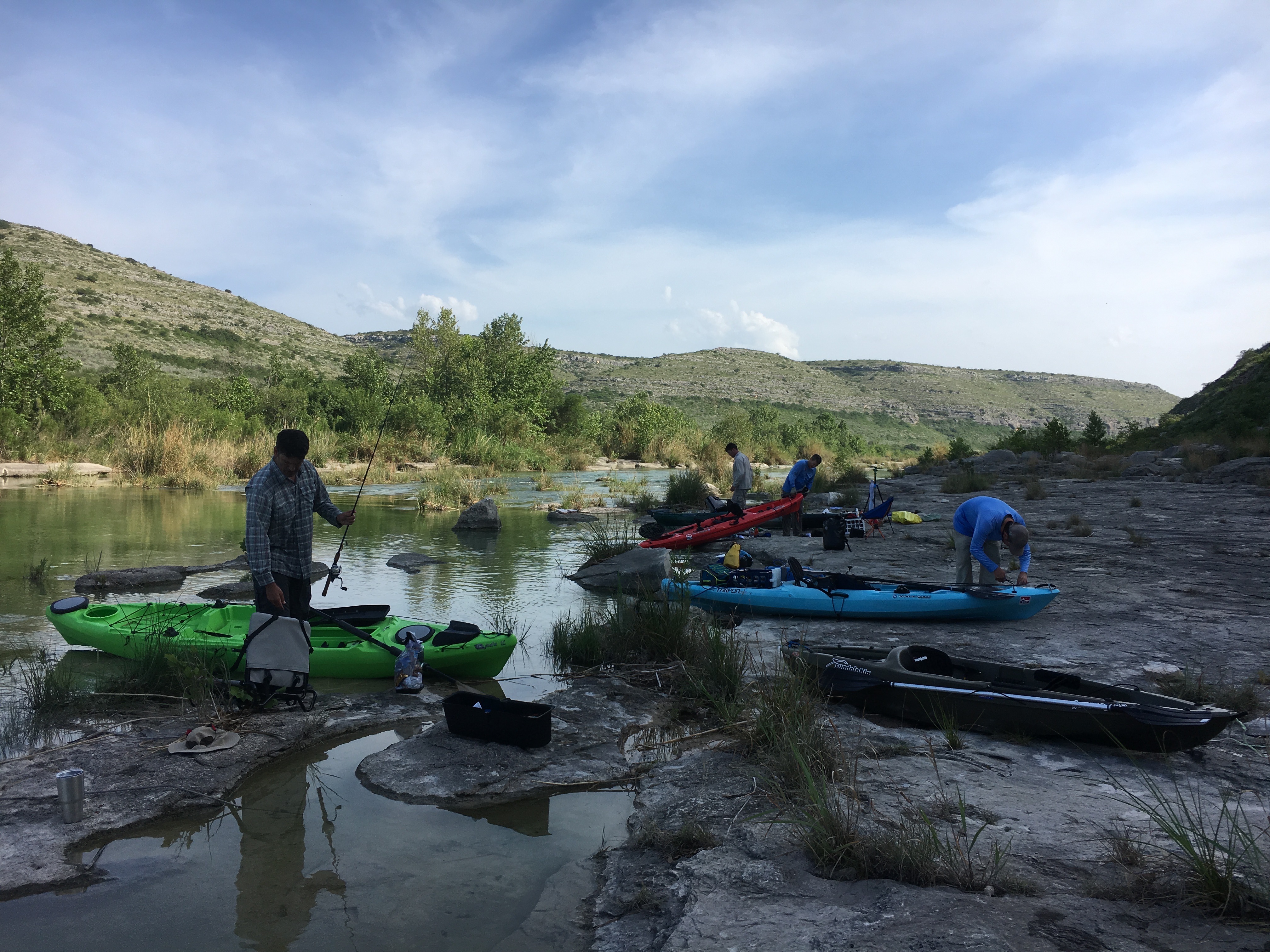
Someone had tablets. Someone had a filter straw. Marcus had a UV stick that looked like something you’d use to charge your phone. You stick it in your water bottle, turn it on, swirl for 90 seconds, done — supposed to kill everything with UV-C light. Efficient. Sketchy. I wasn’t buying it.
I boil. Ten minutes at a rolling boil — what my dad taught me when we backpacked together, when he’d carry frozen fajita steaks in his pack and we’d cook them on a little propane burner at altitude. That method has never failed me, requires no batteries, and has exactly zero moving parts. I’ll keep doing it.
Here’s the thing: Marcus’s UV stick is actually legitimate science. UV-C light is CDC-validated for water treatment, and a SteriPen-style device does work. But there’s something about watching him wave that thing around like a wand that I’ll never fully trust, and he knows it. We gave each other grief about it for four days. Everyone drank clean water. No consensus reached. Still an open debate.
Seeing how other people approach the basics is one of the things I love about a multi-day trip with a good group.
The Rapids Are in Charge
Most of the Devils River is slow-moving pools between Class I and II sections. Beautiful, calm, almost unreal — the kind of water you want to stop and float in and not move.
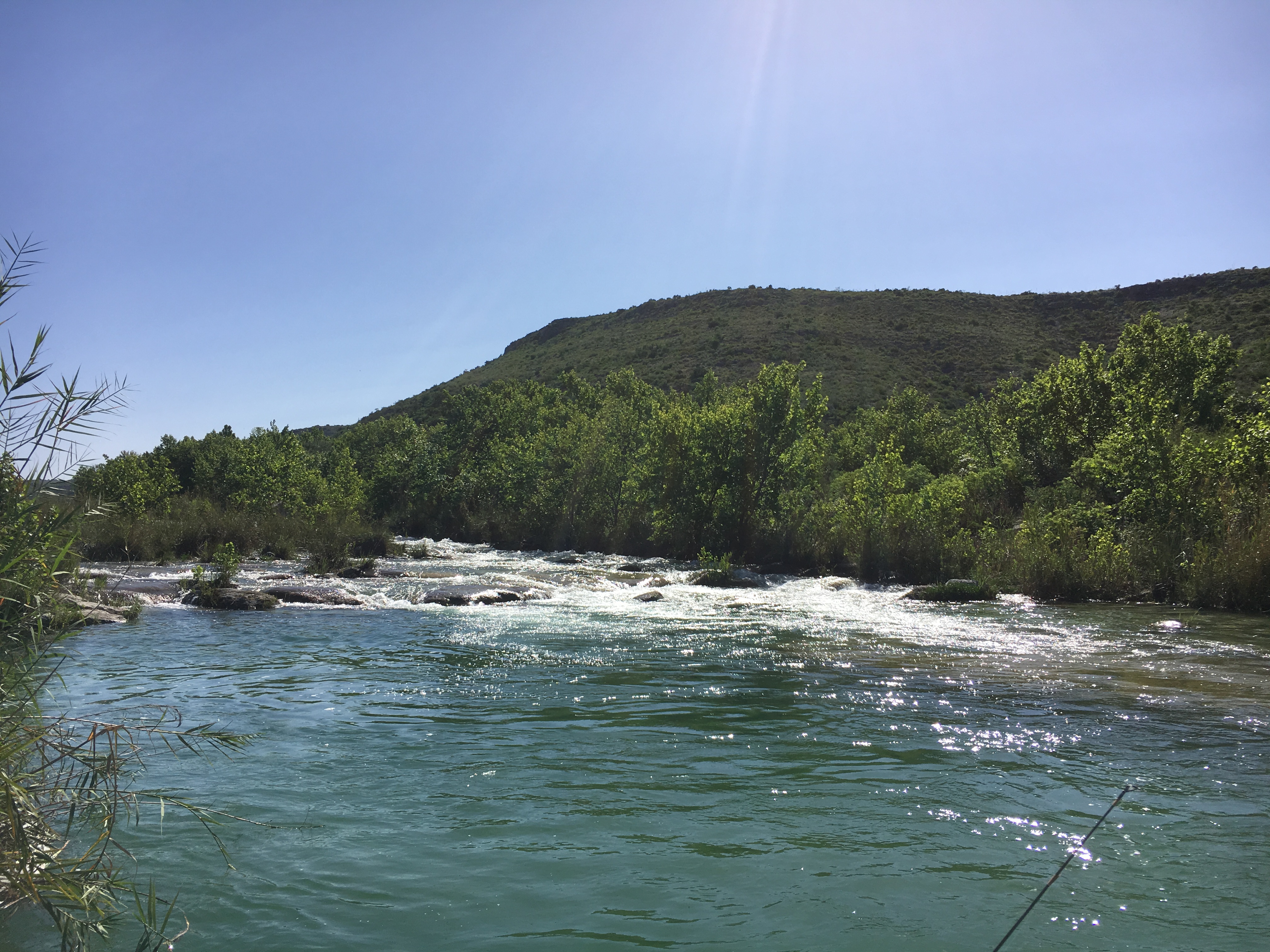
Then you hit the serious water, and the river reminds you who’s running this.
Dolan Falls is at around mile 17 — a 15-foot waterfall. You do not run this. Portage, full stop. The roar sounds different from regular rapids. If you’re paying attention to your mileage, you’ll hear it before you see it. If you’re not, you’ll hear it anyway — trust the sound and get off the water before the lip.
Three Tier Rapids is about two miles further at mile 19. Class IV most of the year. Class V when the river is running high. One of my guys took a hit against a boulder and said it felt like he broke his ribs. He finished the trip. Probably bruised, definitely humbled. Class IV is not rough water — it’s violent current, powerful hydraulics, and rocks waiting for you if you come out of your boat.
What I remember most about the rapids isn’t the impact. It’s the loss of control. You can paddle into the same shoot twice and come out in completely different directions. The river decides. We’d watch each other go through the same line and end up scattered across the pool at the bottom like we’d taken different routes.
At one section the river splits into multiple channels through dense forest — you’re threading through what feels like a maze, branches at head height, deadfall across side channels, obstacles coming at you from every angle. It was chaotic and fast and completely unhinged. It was also the most fun I’ve had in a kayak.
What You’re Really There For
Between the heavy water it’s the best kind of float — long quiet pools, canyon walls closing in above you, water so clear you can see every fish you’re about to try to catch. We fished along the way. Bass and catfish. Caught enough to stay interested.
The beach landings on the sandbars are legitimately beautiful. The kind of isolated places where you pull off, look around, and realize how few people have sat there recently.
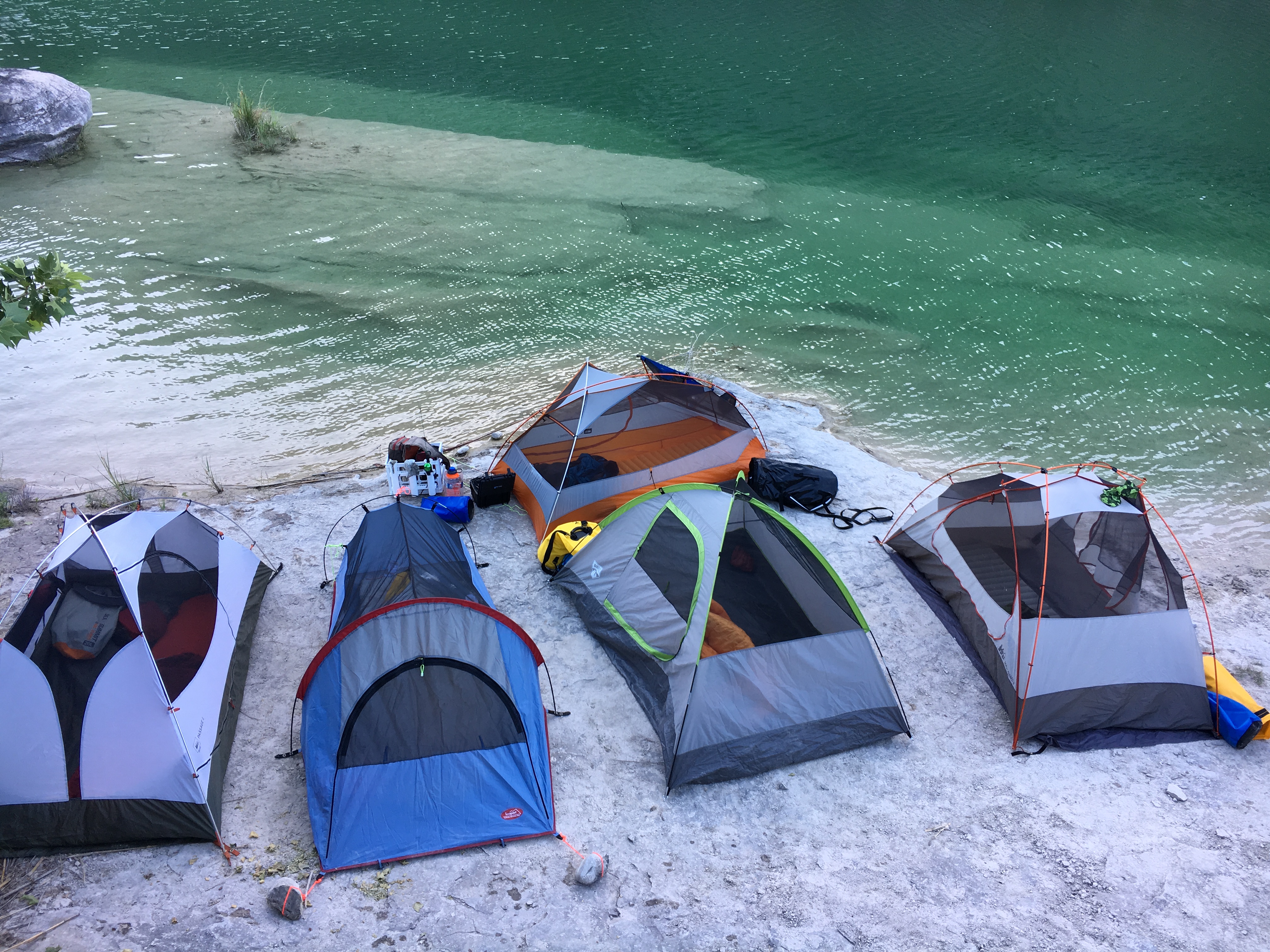
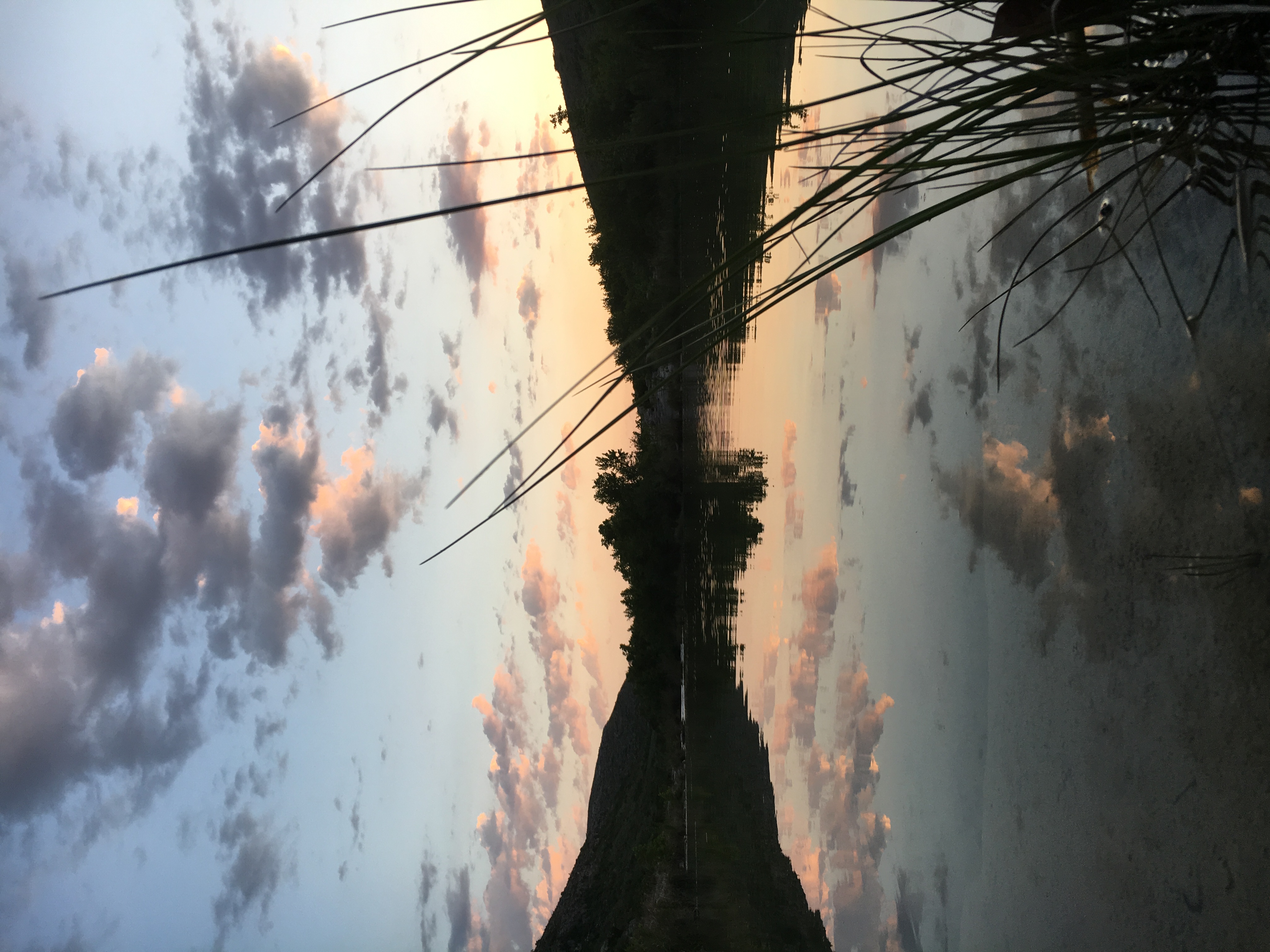
The private property lines come right down to the water on both sides — the gradient boundary is your legal camp zone and it’s narrow. Know the rules, pick smart spots, and you end up with a campsite that looks like this. Worth every bit of the planning.
The stars at night are what you get when you’re 45 miles north of Del Rio with no towns nearby. No light pollution. Just the river and the canyon and whatever you didn’t eat for dinner.
Who This Trip Is For — And Who It Isn’t
This is not a beginner float. The Class IV rapids at Three Tier require solid paddling experience, and the combination of remote location, zero cell service, permit logistics, and WAG-bag camping means this trip requires real planning. Go in understanding what you’re signing up for.
That said — guided trips exist. Several outfitters run rubber raft and guided kayak trips on the Devils River if you want the experience without the solo logistics. The rubber raft option is meaningfully safer in the heavy water. I’d put Amy in one of those before I’d send her down Three Tier in a kayak. Unless she insisted. Which she probably would.
If you’re a capable paddler with a group that can plan and execute a multi-day river trip, this is the one in Texas. There’s no other water like it in the state — maybe in the region. The rules are the reason it’s still worth paddling. Learn them, follow them, and go.
Texas has more free camping than most people realize: Browse TX free camping →. More Texas outdoors: Texas Water Safari → · flash flood in the Davis Mountains → · Texas hiking trails guide →