The World's Toughest Canoe Race: How I Found Out About the Texas Water Safari
The World’s Toughest Canoe Race: How I Found Out About the Texas Water Safari
I was camping and running near San Marcos when I watched a team of five people haul their boats out of the water onto the bank. Gear-loaded canoes, the look of people who’d been outside for several days. I asked them what they were doing.
They told me about the Texas Water Safari.
I had no idea this race existed. Shame on me. I looked into it. This is absolutely my kind of thing, and if it sounds like yours, put it on your bucket list right now.
260 Miles. No Motor. No Sleep.
The Texas Water Safari is a 260-mile self-supported canoe and kayak race from the headwaters of the San Marcos River to Seadrift on the Texas Gulf Coast. Every June. Every year. 62 consecutive years as of 2025. They call it the World’s Toughest Canoe Race and I’m not arguing with them.
Fast professional teams finish in under 48 hours. They do this by not sleeping. You paddle, your partner paddles, someone’s paddling around the clock for two straight days until you hit the bay. Canoe teams — where most first-timers start — take 3 to 5 days. Every boat carries a GPS tracker so the land captains (your support crew on the roads) can follow you in real time.
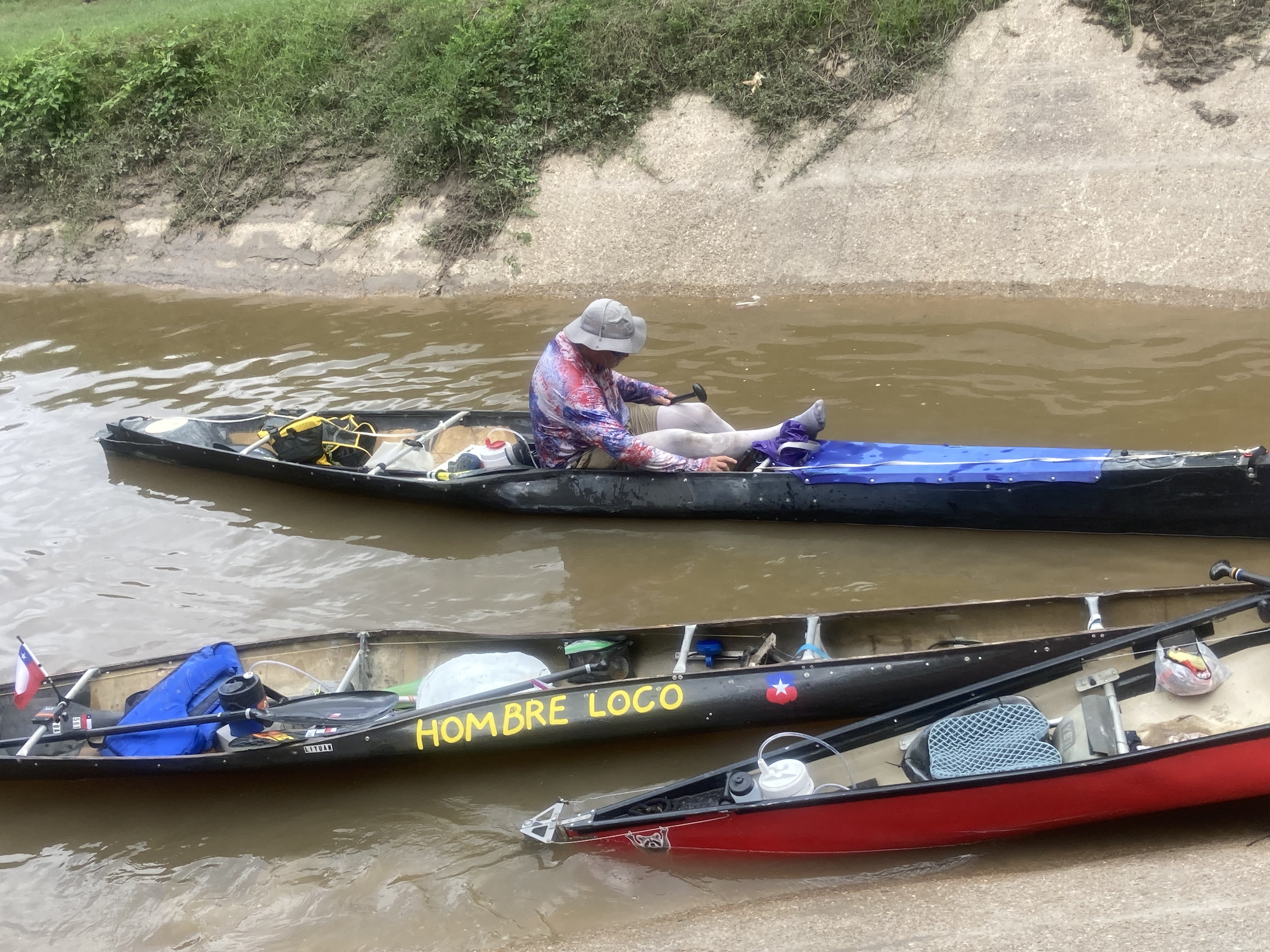
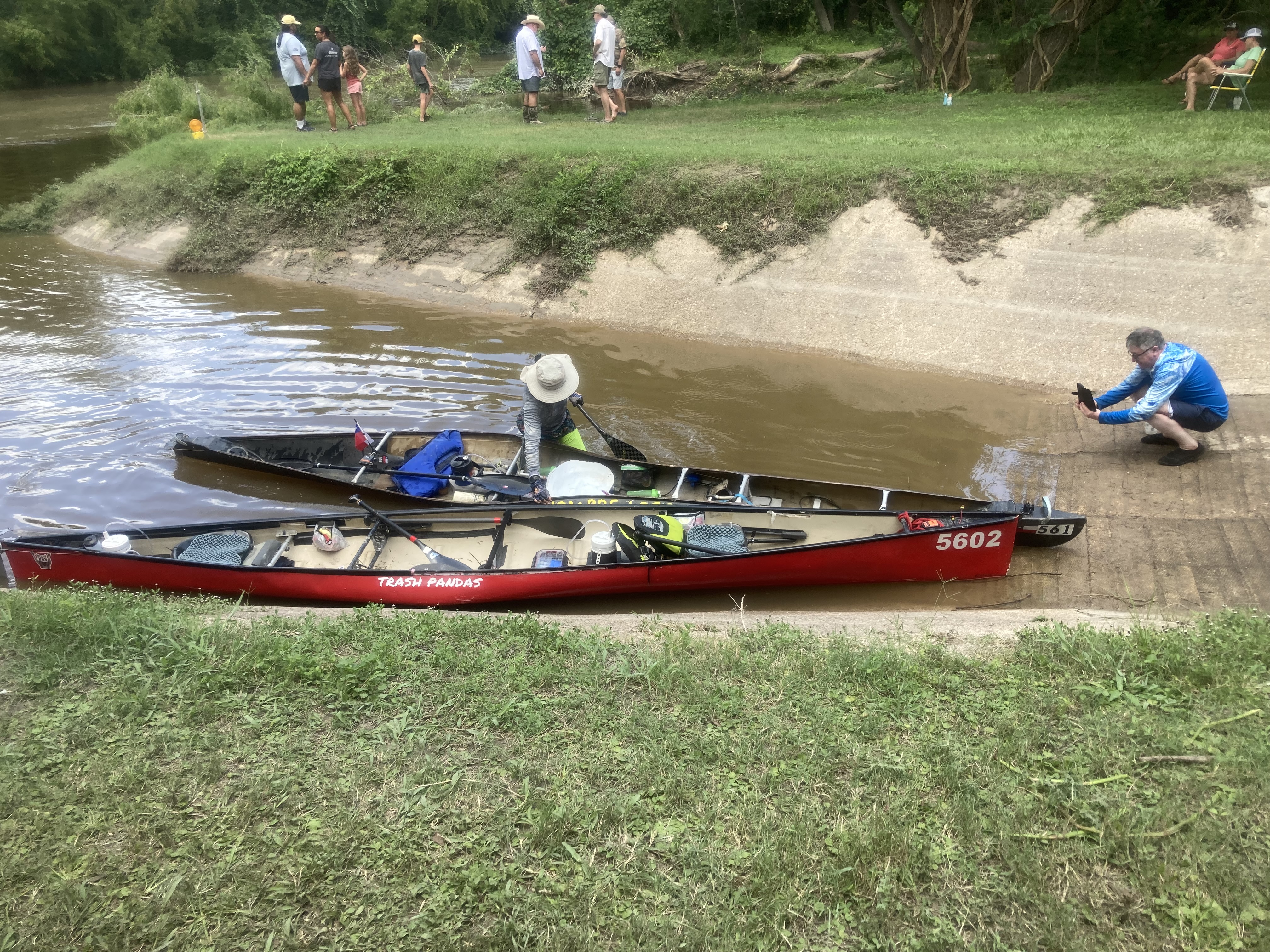
The team names alone made me want to get in the water. In the 2025 race I saw boats labeled Trash Pandas and Hombre Loco pulled up at the checkpoint. That’s the spirit of the thing right there.
It Starts at a Place Boats Are Never Allowed
This is the part that makes the start of the Texas Water Safari genuinely special.
The race begins at Spring Lake in San Marcos — the headwaters of the San Marcos River, on the Texas State University campus at what used to be called Aquarena Springs. Spring Lake is home to eight federally endangered species found almost nowhere else on Earth, including the Texas blind salamander and the fountain darter. Because of that, the lake is one of the most restricted waterways in the state. Motorized boats are banned outright. The only watercraft normally permitted are electric glass-bottom boats operated by the university.
The Texas Water Safari gets a special permit to start there each June. It’s the one day of the year when paddle boats line up in Spring Lake at the headwaters. When those boats push off, they’re passing through water that almost no watercraft ever touches. That detail matters.
2025: The Year the Finish Line Moved
Amy and I drove down to Seadrift on a Saturday morning expecting to catch the finishers at the normal finish line — boats crossing the open bay to the marina, crowds on the dock. We pulled up to a ghost town. Five boats sitting there, a couple of officials, nobody else.
The finish line had moved. Upstream. About 32 miles.
Flooding from the same system that had been tearing through the Hill Country — the same weather that turned the Davis Mountains trip into a near-disaster and brought the flood to Kerrville — had buried the downstream section of the course. Floodwater from the San Antonio River submerged the end of the race route entirely. The first professional teams to reach it reported back to race officials that it wasn’t passable — that it was genuinely dangerous, that someone could die. I heard from people at the checkpoint that one of those early finishers was in tears from what they’d been through. These are not dramatic people. These are people who paddle 260 miles without sleeping. If they said stop the race, the race stopped.
Officials moved the finish line to Swinging Bridge — checkpoint 9, mile 228 — and set up a finish on private property on the backside of a plant near the water. We grabbed directions from an official at Seadrift, drove, found it. Under a shade tree with our cooler and our two dogs, exactly where we wanted to be.
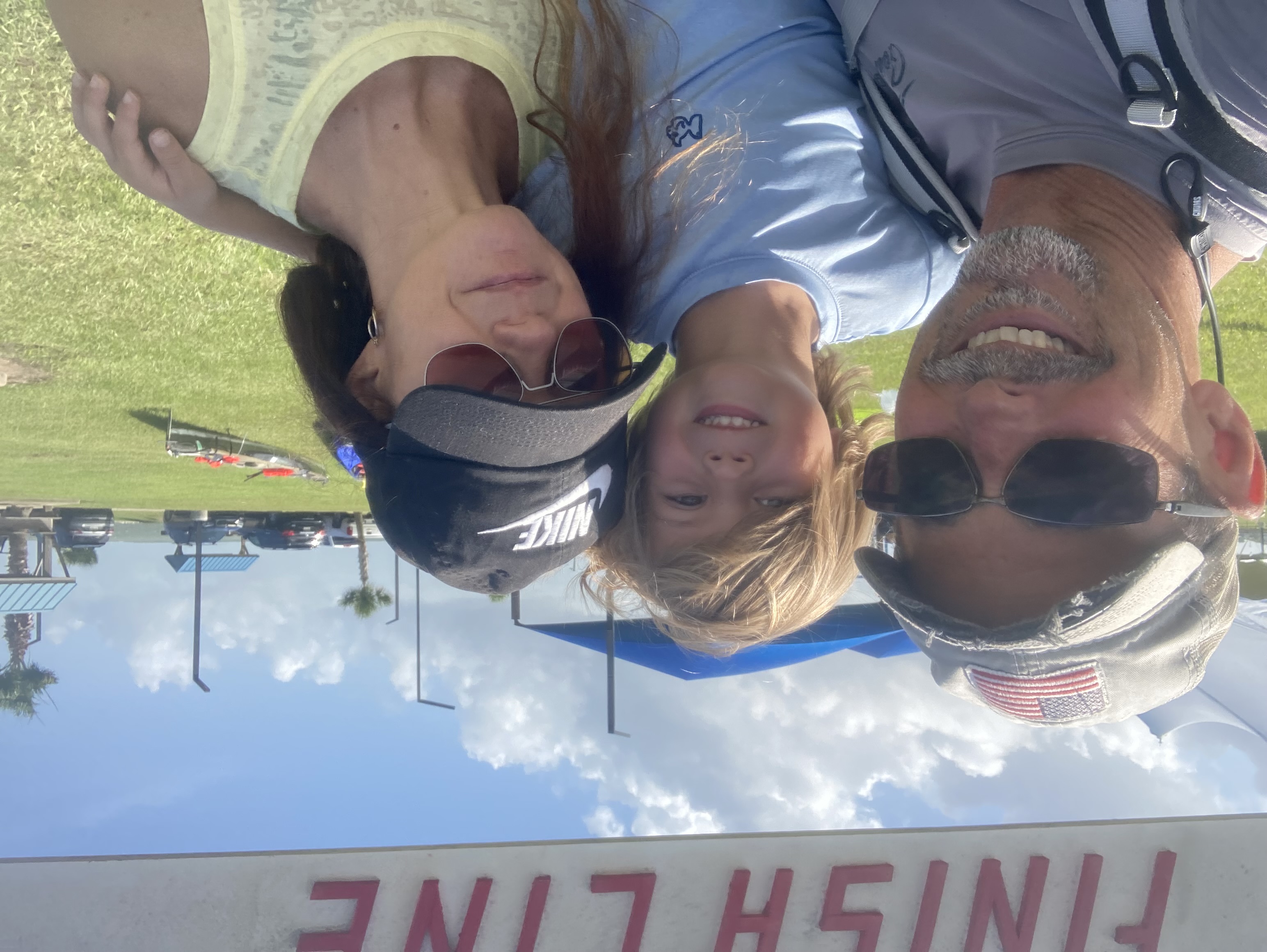
These were our kind of people.
What a Finisher Actually Looks Like
The woman who sat down next to us under that shade tree had just finished a rim-to-rim race and was there to support her boyfriend’s team. She explained the classes and categories I didn’t know existed. Canoe is the entry-level class — harder to go fast, but more stable and more room for gear. Most first-timers don’t finish. Finishing a canoe class is a badge of honor on its own.
The boats coming off the water told the whole story of the race.
The amateurs — people who hadn’t done this before — were in short-sleeve T-shirts and shorts. You could see the mistake immediately. One woman’s exposed legs were the worst sunburn I’ve ever seen in person, with the skin rubbed completely raw from days of constant wet paddling contact. Not chafing — raw. The look of someone who had a very hard few days and still finished. Respect.
The professionals looked completely different. Long-sleeve technical shirts, full-length compression pants, large-brimmed hats, goggles. Every square inch covered. They understood what 48 to 72 hours of sun exposure and wet friction would do and they dressed for the consequence, not the temperature.
The Dangers Are Real
The flooding in 2025 wasn’t just about the finish line. Conditions on the water were genuinely dangerous — fast teams reported paddling through treetops, through flooded sections where the river channel had disappeared into the surrounding landscape. The race has 260 miles of Texas river including stretches of the Guadalupe and San Antonio rivers. Under flood stage that’s not a paddling race, it’s a survival exercise.
There’s a story from 2025 that I heard secondhand from someone at the checkpoint. A team pulled off the bank during the night for a rest stop. They slept. The water rose. When they woke up, their boat was gone — taken by the current in the dark. They were stranded on a riverbank in the middle of the night with no boat, no way forward. They had to be rescued. They did not finish.
And that’s not counting the snakes. Texas rivers, summer, flood conditions. The dangers are part of the race. The participants know this. The smart ones plan for it.
How to Get Into It
Start in a canoe. The canoe class is the entry point — more forgiving, enough room to pack smart, and finishing is the whole achievement. Most first-timers don’t make it. If you do, you’ve done something most people never will.
The other option — which I’m thinking hard about — is being a land captain. Every team needs ground support: someone following checkpoints, tracking GPS, staging food and gear, troubleshooting logistics on the road. You don’t get in the water, but you’re part of the race and you see the whole course from the road. A good way to understand what you’re getting into before you commit to a boat.
The registration, team rules, and land captain requirements are all on the Texas Water Safari website. And because Trek4Free has been tracking this race since we found out it existed, it’s on our events map too.
Texas Water Safari on Trek4Free Events →
I don’t keep up with social media. I missed this race for years. I found out about it from five people climbing out of the water during a camping trip. That’s the kind of thing you can’t manufacture — and the kind of thing that makes me glad we still get outside and talk to strangers.
What do you have to lose but some skin.
More Texas outdoors: Devils River kayaking → · flash flood in the Davis Mountains → · Browse TX free camping →