Trail Legends Are Real People
Trail Legends Are Real People
I have now, on two separate occasions, in two separate states, stood next to one of the most accomplished ultrarunners in North American history without knowing it.
Both times they told me themselves. Eventually.
The Stranger on the Forest Road
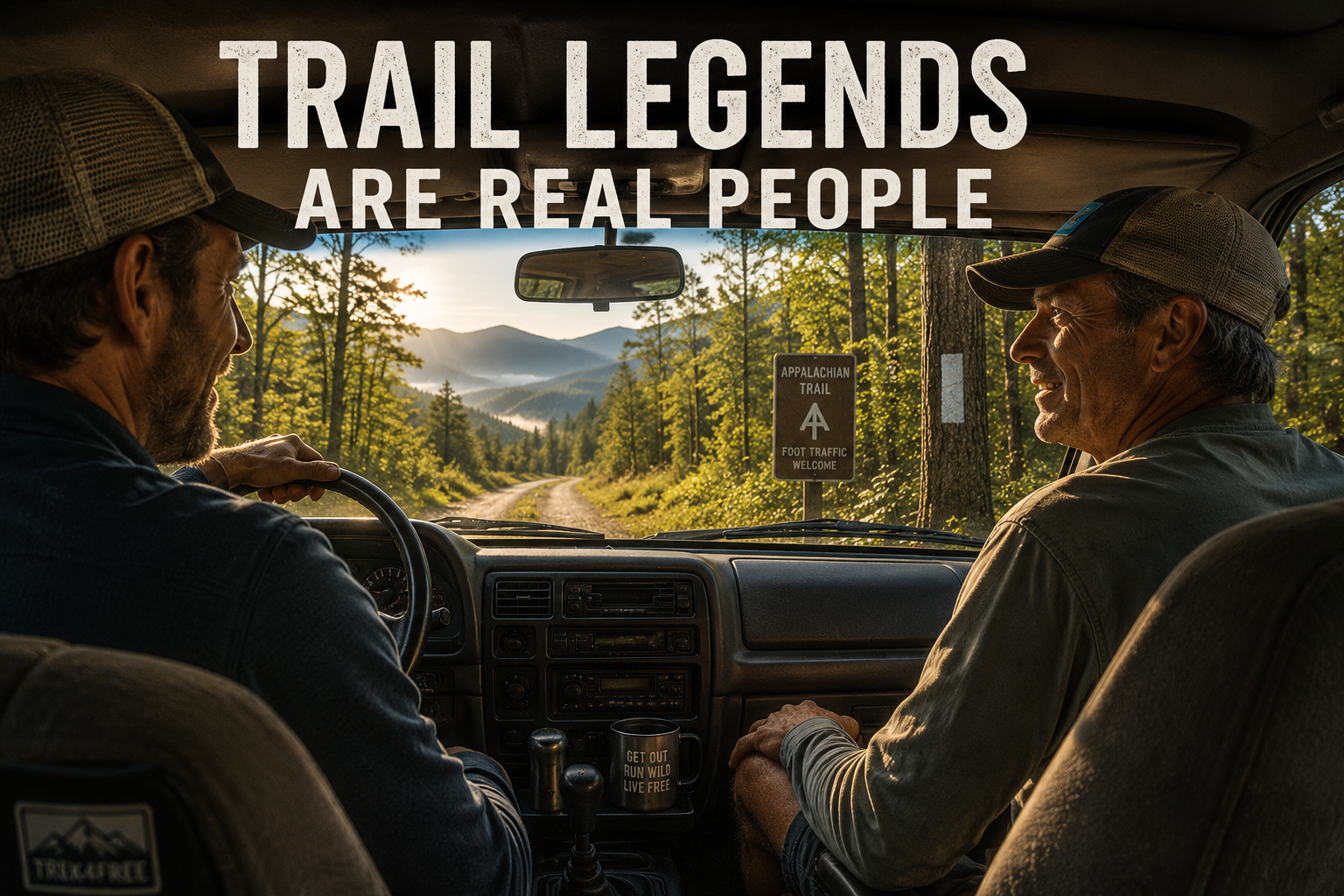
We were heading out to run a section of the Appalachian Trail — no race, no event, just Amy and me and a forest road in Virginia.
On the way in I spotted a guy walking back toward the trailhead. He was done for the day. I pulled over and offered him a ride.
He got in. We started talking the way you do when you’re in a truck on a dirt road and there’s nothing else going on.
I don’t know why — I had just watched a documentary on it — but I started talking about the Barkley Marathons.
If you haven’t seen the documentary, here’s what you need to know: the Barkley is an invitation-only ultramarathon held somewhere in the Tennessee mountains. The exact course is not published. You receive your entry on a yellow piece of paper. The race covers approximately 100 miles with somewhere around 60,000 feet of elevation gain. The cutoff is 60 hours. In the first 25 years of the race, only ten people finished it. Most years nobody finishes. The year the documentary was filmed, nobody finished.
I was talking about it the way you do when you’ve just discovered something exists and can’t stop thinking about it.
The guy in the passenger seat got quiet for a second.
Then he said he’d run it.
I asked how he did.
He finished it.
Second person ever to finish the Barkley Marathons. First American.
His name was David Horton. He also held the Appalachian Trail speed record — 2,190 miles in approximately 52 days. The trail we were about to run a section of. I had absolutely no idea.
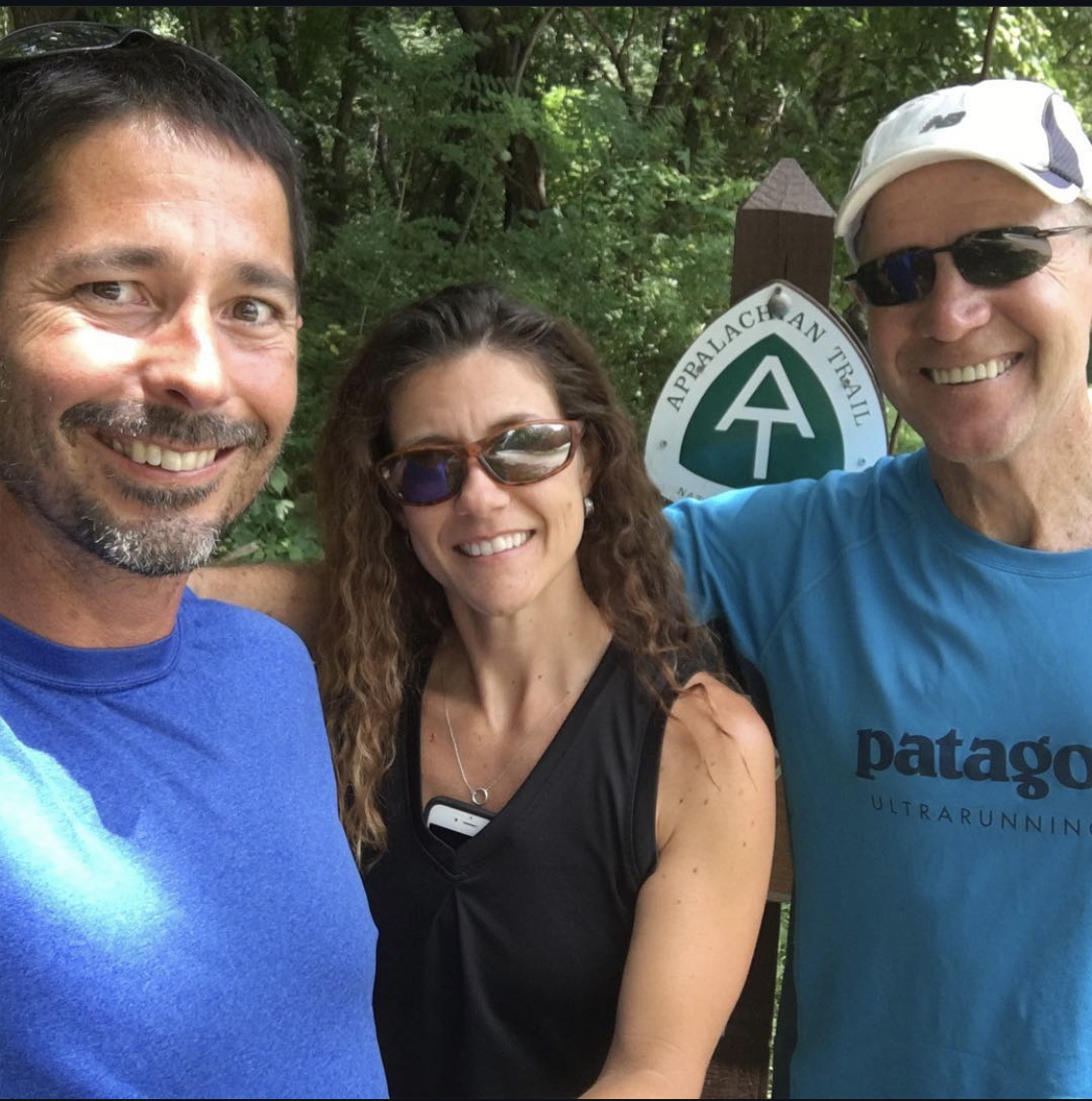
We got a photo at the AT blaze before he went his way and we went ours. I don’t think I said anything coherent for about ten minutes after that.
”You’re Not Going to Make It”
The second encounter was in Colorado. Amy and I were running up Pikes Peak — no race, just running — and stopped at Barr Camp, the halfway point at around 10,200 feet.
Barr Camp is a small log cabin that’s been there since the 1920s. It has a full-time caretaker who lives on-site year-round, cooks for hikers, and runs mountain rescues when needed. It is not a place you end up by accident.
A guy inside told us, kindly but clearly, that we weren’t going to make the summit in time. The weather, the light, the distance remaining. He laid it out like a reasonable human being.
Amy doesn’t like being told she can’t do something.
I want to be clear: he was right.
We took the cog railway up the next morning instead. At the summit — 14,115 feet — it was arctic. Wind, ice, no feeling in my hands. The train conductor pointed to the right side of the car and indicated two crosses visible on the mountainside. A couple from Texas, he said, who had thought they could make it on foot and hadn’t. That seriously happened. He was not making a point. He was just telling us where the crosses were.
The guy at Barr Camp had done us a genuine favor.
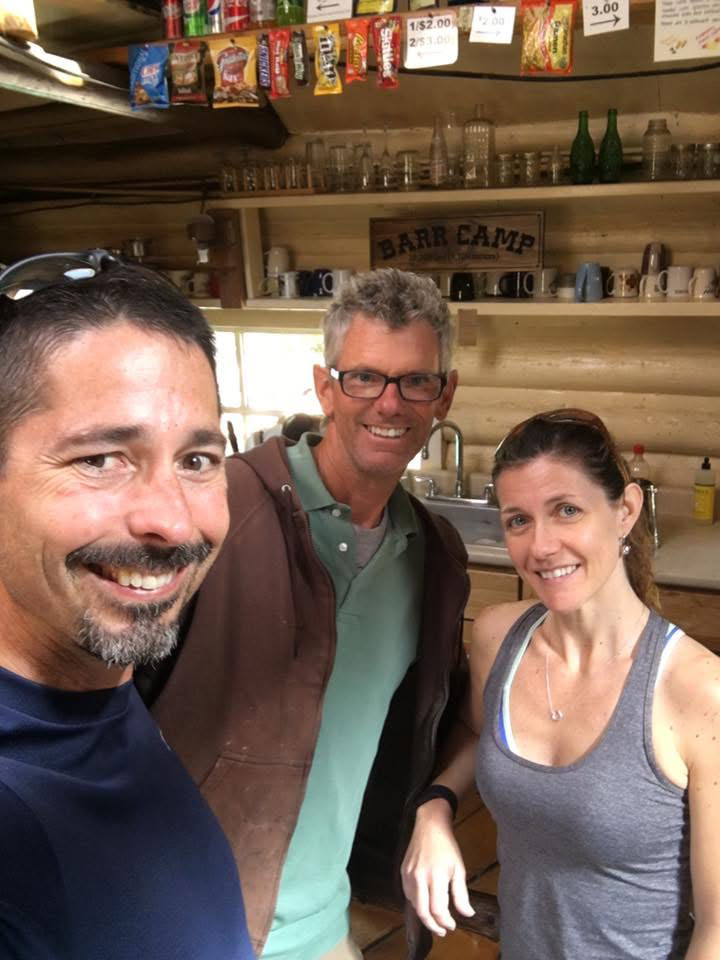
By the time we were back inside talking to him, we found out why he was there that day. The regular caretaker — his friend — was getting married. He had come up to cover the cabin as a favor on the wedding day. No announcement, just showing up on a mountain because someone needed someone there.
Somewhere in the conversation, he mentioned he runs 100-mile races. I asked how often.
Every year, he said.
For how long?
Twenty-two years straight.
We didn’t catch his name. He didn’t offer it, and we weren’t the type to ask for credentials. We were just talking.
Twenty-two consecutive years of finishing 100-mile races. Said simply, in passing, the way you’d mention that you’ve been running the same loop on Tuesday mornings. Just a thing he did.
He was covering a cabin on a mountain because his friend was getting married.
What I Am Not
I want to be clear about something: I am not an ultrarunner. I am not a competitive distance runner of any kind. I ran cross country in high school and I was average — never broke 18 minutes in the 5K. I am a CrossFit guy who loves being outside. I’m built more like a sprinter than a distance runner. I rock climb. I am out there because running outside is simple and free and the mountains don’t care what your finishing time is.
I did not seek either of these encounters out. I was not at a race. I was not in any running community where you might expect to cross paths with people like this. I was on a dirt road in Virginia and in a cabin in Colorado, and on both occasions a stranger started talking.
The trail does not sort people by achievement. It put a guy who ran the Barkley in the passenger seat of my beat-up 4x4 Toyota van. It put a man with 22 consecutive years of 100-mile finishes in the same cabin as two people who just got talked out of summiting a mountain they weren’t prepared for.
That is the whole thing. That is why I keep going outside.
Trail legends are real people. You can just meet them. On a road. In a cabin. On a Saturday when you had no particular plan.
I hope to meet you along the way.
David Horton is a professor at Liberty University in Lynchburg, Virginia. The Barkley Marathons documentary (2014) is on various streaming platforms and is worth every minute. The man at Barr Camp never gave us his name.
Complete AT guide — everything about the trail from Springer to Katahdin → | How trail names work and how you earn one → | Trek4Free’s explore map covers Appalachian Trail trailheads and free camping along the entire AT corridor.