
Three Sisters Springs: Where Manatees Swim Out as You Swim In
Three Sisters Springs: Where Manatees Swim Out as You Swim In
There is a narrow passage at Three Sisters Springs in Crystal River, Florida where spring water flows outward and manatees move in both directions at once. If you swim into that passage, you will be moving through the same water they are — close enough to count their barnacles, far enough to understand that you are the one who doesn’t belong here.
I am getting ahead of myself. First, the gate.
The Gate
We had been driving most of the day and arrived at Rainbow Springs State Park well after dark. The campground gate was closed. Locked. No ranger. No intercom. Just a metal gate across the road and the specific silence of the Florida woods at night.
I went looking for a flashlight.
The flashlight was somewhere in the car. The car was full. It was very dark. My daughter was with me. I want to be clear that a flashlight is not a complicated piece of preparedness — it is a cylinder with a bulb at one end — and I could not locate mine. My cell phone, which I was using as a light source, was not cutting the muster. A dad should be on top of this. I was not on top of this.
We walked down the road in the dark. Found a number. Eventually got sorted out and found the campsite. The tent went up closer to midnight than I would have preferred with a kid in tow.
If you are going to Rainbow Springs: call 352-465-8550 between 10:30am and 4:30pm on the day you plan to arrive. They will give you the gate access code. This is a real system that still exists today. Do not learn about it the way I did.
Crystal River Knows What It Has
The town of Crystal River is a fishing town that figured out it was sitting on top of something remarkable. The gas stations have manatee stickers. The dive shops are directly on the water. The restaurants have laminated menus with photos of people floating next to something the size of a refrigerator.
Three Sisters Springs is inside Crystal River National Wildlife Refuge, managed by the U.S. Fish and Wildlife Service. The springs flow year-round at 72°F. That sounds warm until you are swimming in it — 72°F water is cold, and you will want a wetsuit. But in winter, when the Gulf of Mexico drops below 68°F, that same 72°F feels like a heat lamp to a manatee. Hundreds of them migrate into Kings Bay and the connected spring systems to stay warm. This has been happening every winter for as long as there have been manatees and springs.
The access is by kayak, canoe, or swimming from Kings Bay. No motorized boats allowed inside the spring. USFWS rangers patrol the area year-round.
The Kayaks
We rented kayaks and wetsuits from one of the outfitters in town. The wetsuit is not optional — the spring water is genuinely cold by swimming standards, regardless of what the thermometer says. The air temperature in winter doesn’t help either. Get the wetsuit.
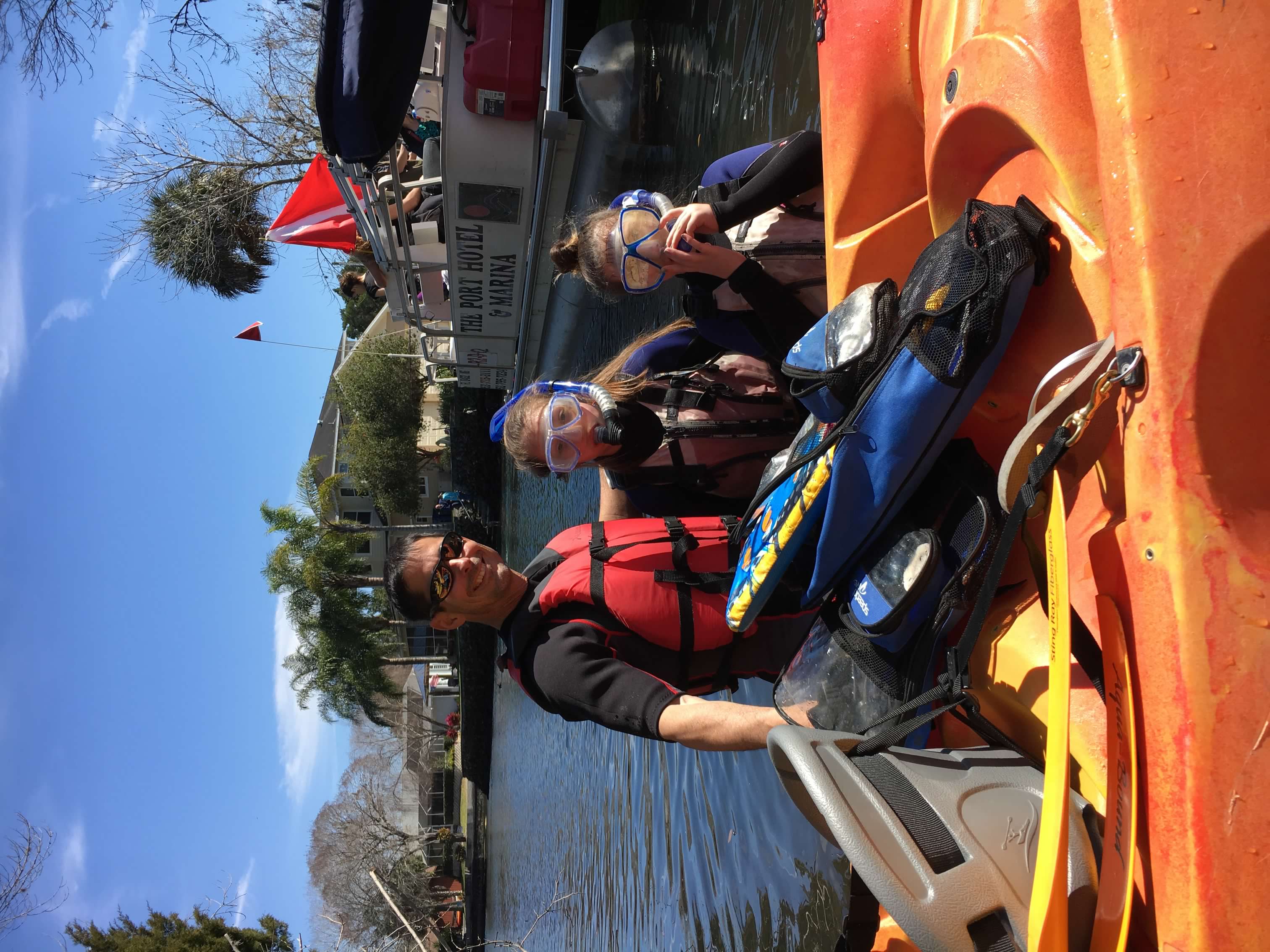
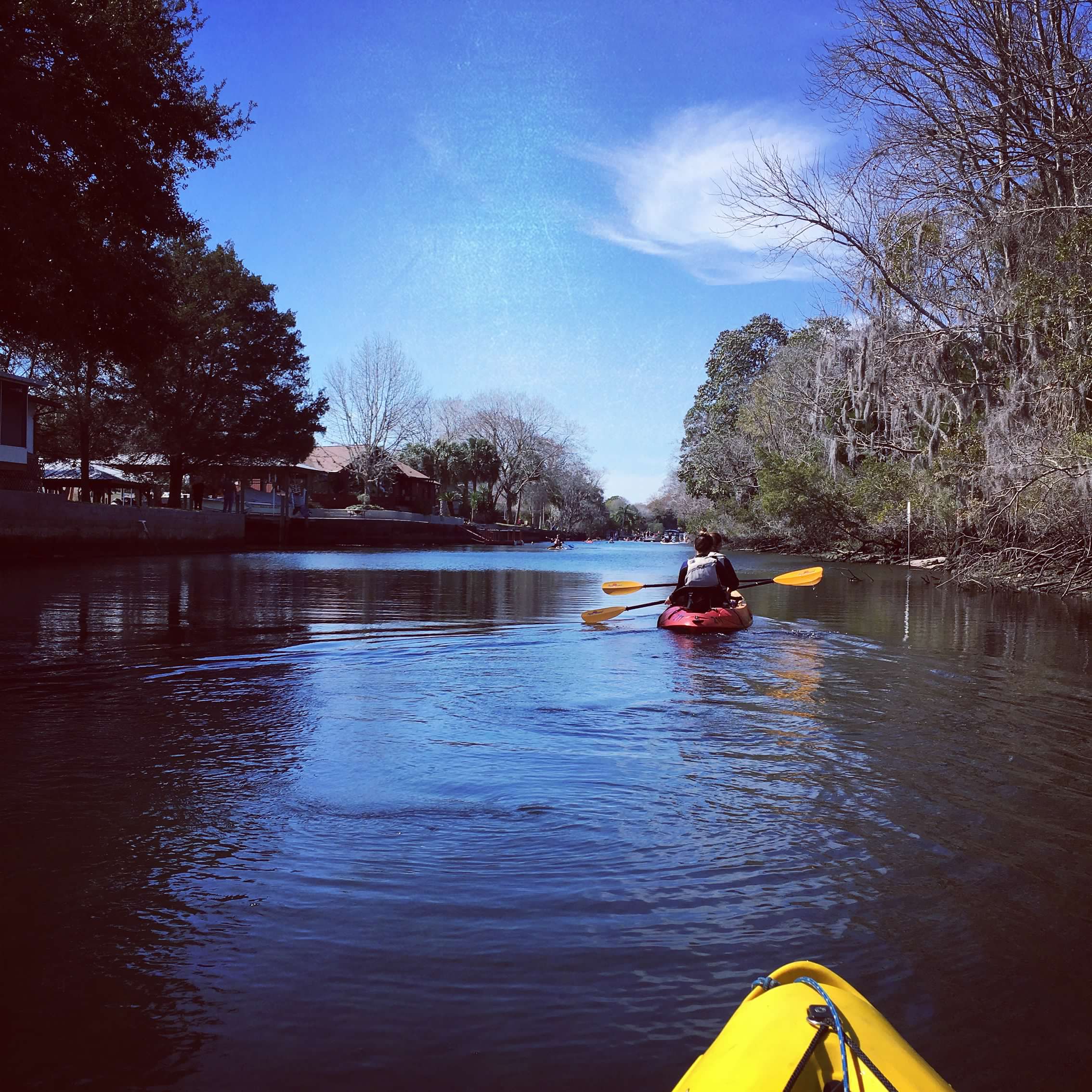
The daughters were extremely enthusiastic about the wetsuits and snorkel masks. We launched from Kings Bay as the sun was coming up. The sky was that particular gray-white of a Florida winter morning, flat and still. The bay was calm. We paddled out following other kayakers who knew where they were going, which in my experience is always the correct method.
The Paddle In
Kings Bay is not small. It takes a while to cross. What you notice is the temperature change before you see anything — the water around the spring run is noticeably warmer than the bay. Warmer than the bay does not mean warm. It means you feel it before the springs come into view, and you understand immediately why every manatee within forty miles is headed the same direction.
Manatees figure out the temperature change too. That is the entire reason they are here.
A Small Confession
Before we get to the springs, I need to tell you about the canal.
The paddle from Kings Bay to Three Sisters takes you through water that is not always crystal clear. Residential canals. Darker water. Florida water.
At some point on that approach I saw bubbles. Manatees were on my mind. I made a decision that I cannot fully explain even now and helped my daughter into the water to go investigate.
She came up through the surface with her snorkel mask on and asked, calmly, whether there were alligators in here.
I knew the answer to that question immediately and with absolute certainty. I had her out of the water before she finished asking it.
There were no alligators. That is not the point. The point is that I put her in murky Florida canal water on the assumption that bubbles meant manatee. Alligators share a significant amount of Florida water with manatees and everything else. I should have known exactly what kind of water I was in before I made that call.
The crystal spring is clear. You can see the bottom. You can see what is sharing the water with you. The approach canals are not the spring. Know the difference before anyone goes in.
Situational awareness is real. I failed at it that morning. My daughter was fine. I was not fine, and I am still not entirely fine about it.
The Choke-Point
Three Sisters Springs has a narrow entrance — the opening where the spring run meets open water. Spring water flows outward through this passage. Cold to you, warm enough to a manatee in January — which is why they use it constantly, moving in both directions.
When we swam into the passage, manatees were moving through it. That is the encounter. That is what I drove all day to get to.
You are not watching them from a boat. You are not photographing them through glass. You are in the same water, at the same level, and they are moving past you with no particular concern for your presence. They are large. They are slow. One looked at me directly and then continued on its way, which I found to be the correct response to a human floating in the water.
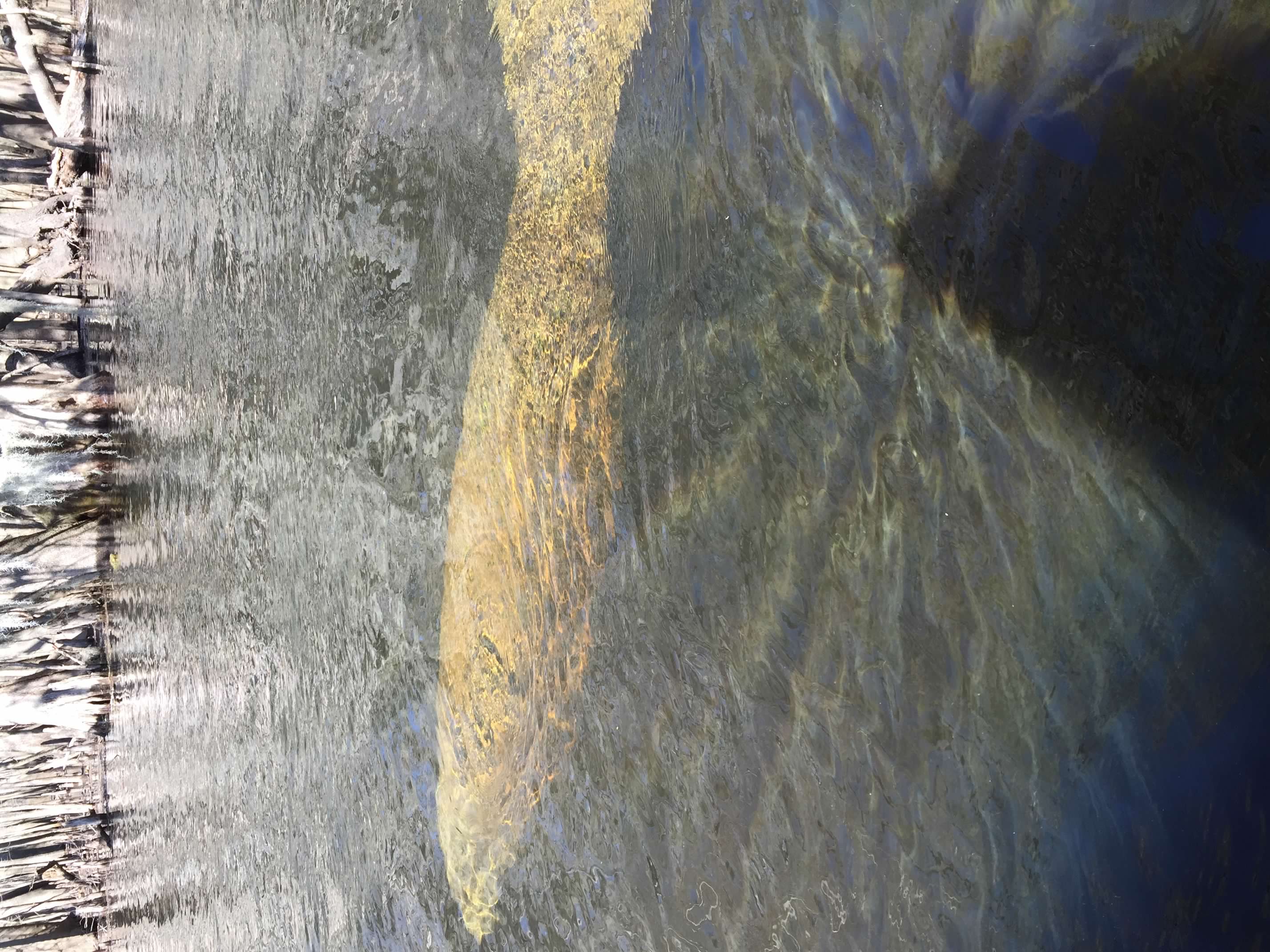
The USFWS rangers are present in the water and on the banks, and they mean it. Do not approach resting animals. Maintain your distance from manatees sleeping on the bottom. The rules exist because this ecosystem requires them, and the rangers will tell you this politely and then tell you again if they need to.
Before renting kayaks, every outfitter makes you watch a video covering exactly this. I am an Eagle Scout. I took it seriously.
So there we were, Amy and I swimming hand in hand through the spring, manatees moving around us, and one came directly toward her. Amy reached out to touch it. I, the rule-following Boy Scout who had watched the entire video and absorbed every word, slapped her hand back.
The manatee turned and swam directly at me and gave me a full hug.
Amy has not let this go. She will not let this go. I do not expect her to ever let this go.
For the record: the rule is about not approaching or harassing manatees. If a 1,200-pound animal decides to initiate contact with you, that is between you and the manatee and I am not sure the video covers it.
We have been back several times since that first trip. The choke-point never gets old.
What Winter Means
Winter is when the manatee concentration is highest. It is also when the human concentration is highest.
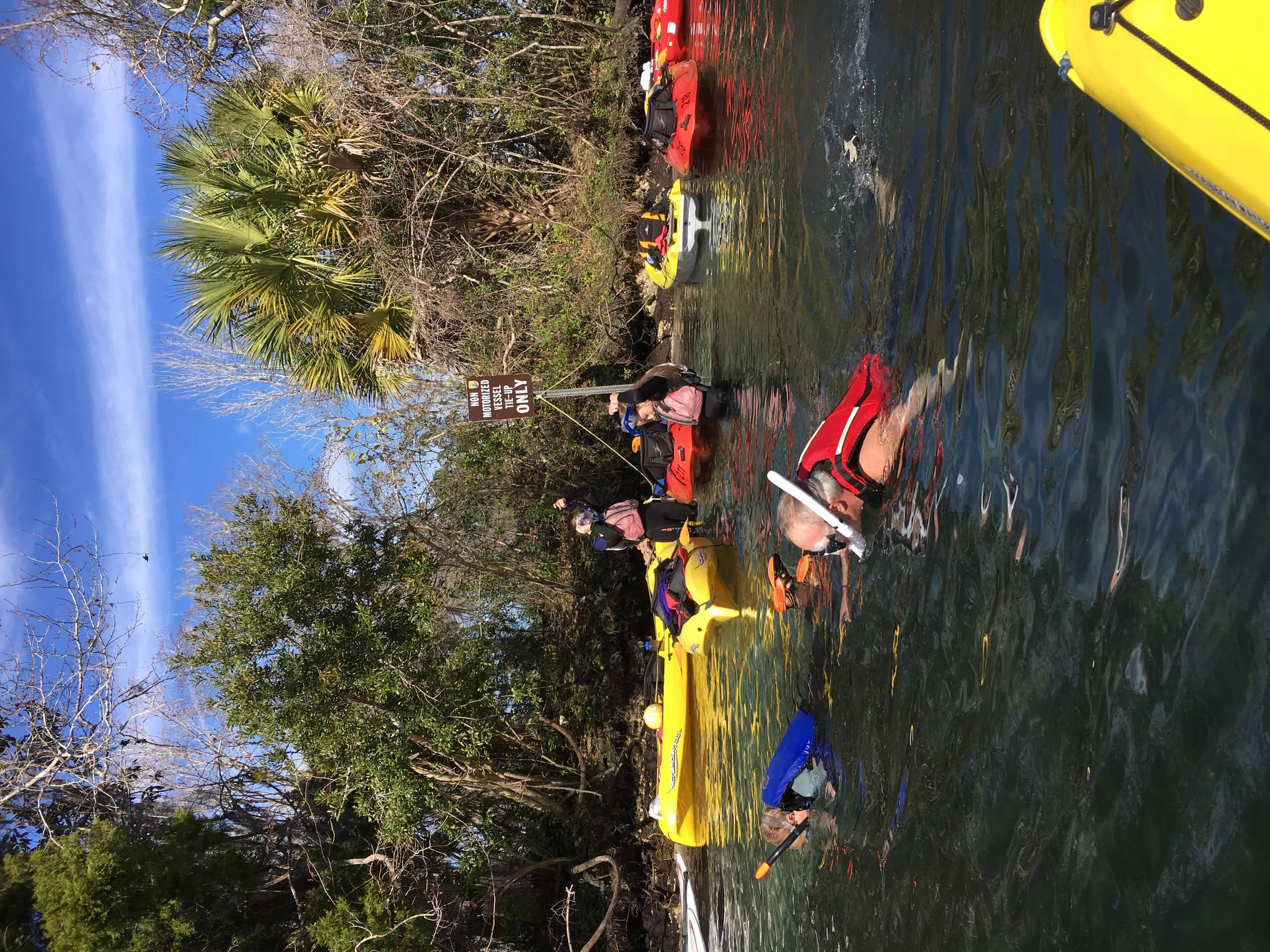
Every outfitter in town is booked. Every kayak on the water is occupied. When the tours arrive at the same time the spring entrance can look like a parking lot. The rangers are busy. You will share this experience with a significant number of other people, and some of them will be less careful than you.
This is still worth it. The number of manatees in the water in winter is extraordinary. You will not find this in summer.
Summer is the other option: fewer people, fewer restrictions, more room in the spring — and no guarantee of manatees. The Gulf is warmer. They spread out. You might see a few. You might not.
The honest answer is that the winter version, despite the crowds, is the one that stays with you. If you’re going to make the drive, go in December or January and accept the company.
The Dog
Lacy came on this trip. She did not swim with the manatees — a German Shorthaired Pointer is not a wildlife observer, she is a wildlife enthusiast of a different kind, and keeping her off the kayak while we were in the water required a dedicated shore crew.
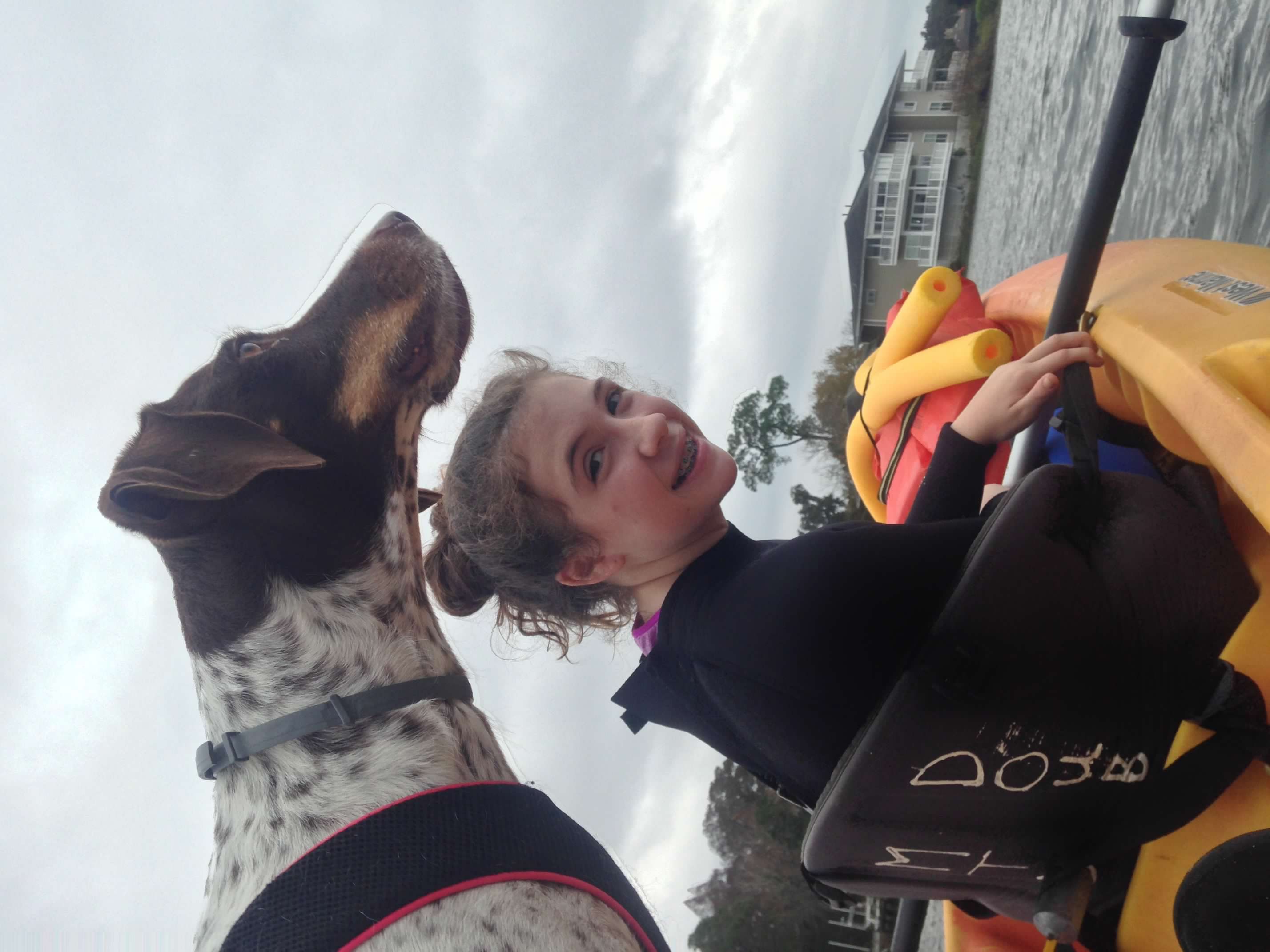
She had opinions about this arrangement. She was fine. She always was.
Three Sisters Springs is free to access as part of Crystal River National Wildlife Refuge. Kayak and wetsuit rentals are available from multiple outfitters in Crystal River — book ahead in winter. Rainbow Springs State Park in Dunnellon makes a good base camp, about 45 minutes away; call 352-465-8550 between 10:30am–4:30pm the day you arrive for the after-hours gate code. Trek4Free’s explore map includes Three Sisters Springs in the swimming holes layer.