Swimming Holes, Waterfalls, and What You're Actually Looking For
Swimming Holes, Waterfalls, and What You’re Actually Looking For
The best swimming holes don’t have names on maps. They don’t have parking lots or fee stations or signs pointing to them. They’re just there, on a creek in a national forest or at the bottom of a gorge that takes some route-finding to reach, cold and clear and completely free.
This is most of what I’m looking for when I head out.
What the Trail Is Actually For
After 40 years of trail running and hiking, I’ve gotten clearer on why I go. It’s not the mileage — miles are a byproduct, not the goal. It’s not the fitness, though that comes along for the ride. It’s not even the destination, most of the time.
It’s the state of mind that happens when you’re moving through the woods with nothing more important to do than put one foot in front of the other.
The Japanese call it shinrin-yoku — forest bathing. Researchers have spent considerable effort confirming what anyone who runs trails already knows: something changes in your nervous system when you’re outside in nature, moving through trees, following water. Cortisol drops. Attention sharpens. The noise of everything else gets quiet.
I find my zen on the trail. I don’t find it anywhere else quite as reliably.
The Swimming Hole as Destination
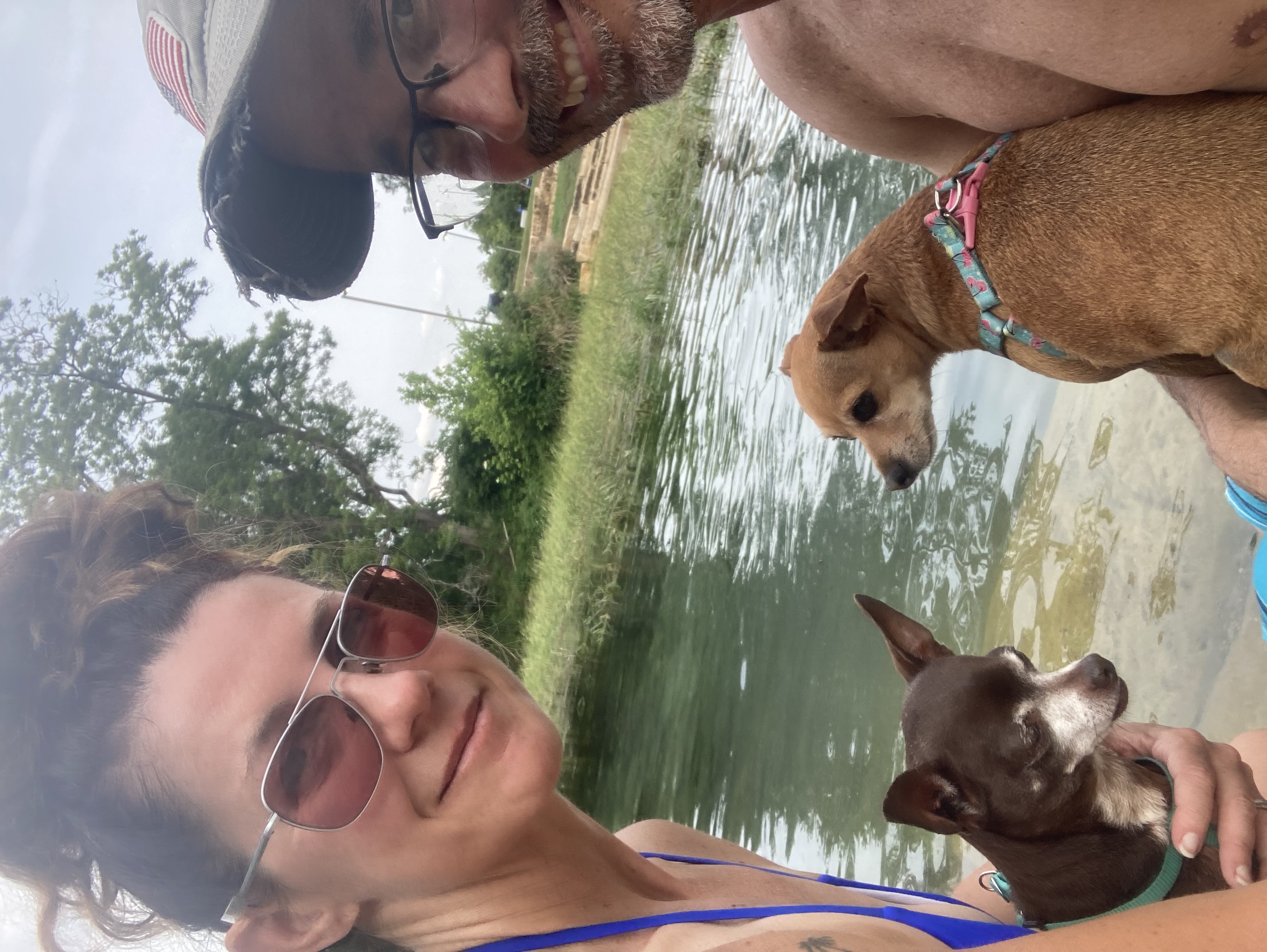
Waterfalls and swimming holes are the perfect trail objective because they require nothing of you except to show up. No permit system. No timed entry. No lottery. No fee, usually. Just a place where water moves over rock and collects in a pool, cold and clear, and you can get in it or sit next to it or let the dogs wade in it while you eat something from a pop-top can on a flat rock in the sun.
We’ve found swimming holes by following creek sounds off trail. By asking a ranger where the water is. By noticing a pull-off on a forest road with a faint path beaten down to the water’s edge. By looking at a topo map for the place where the contour lines get tight and the creek drops — that’s usually where the interesting water is.
The dogs know before we do. They can smell the water from a quarter mile away and their pace picks up involuntarily. That’s usually a reliable signal.
Animal Encounters and Staying Alert
Moving through wild places, especially near water, means moving through habitat that belongs to other things. We’ve had deer walk through camp. We’ve watched herons fish from ten feet away, too focused on the water to notice us. We’ve seen evidence of bears near creek corridors without seeing the bears themselves.
The swimming hole is often where the wildlife concentrates, because the water concentrates everything. That’s part of the draw — you’re not just in the woods, you’re in the part of the woods that matters most.
Staying alert on the trail isn’t about fear. It’s about attention — the same quality that makes a good run feel like a meditation. You’re watching the ground in front of you, listening for water, noticing the light changing through the trees, tracking the dogs’ behavior because they pick up things before you do. That alertness is part of why being outside feels so different from everything else. Your whole system is engaged.
I’ve come across mountain lion tracks in fresh snow in West Virginia backcountry. I’ve had a grouse launch from directly under my feet while I was on high alert for said mountain lion. I’ve waded creek crossings that turned out to be deeper than they looked, and stood at the top of waterfalls trying to figure out whether the pool below was swimmable or not.
None of it has made me want to go less. All of it has made the going feel more real.
Finding the Water
The hard part used to be knowing where to look. USGS topo maps are the traditional answer — they show creek systems and elevation changes that tell you where the interesting water is likely to be. But even with a topo, you’re reading terrain without knowing ground truth: is that creek accessible? Is that falls swimmable or just a drop over rock with no pool at the bottom?
Trek4Free’s swimming holes database aggregates known swimming holes across the country — searchable by location on the explore map. It doesn’t replace local knowledge, but it gives you a starting point that used to take real legwork to assemble. Filter by region, cross-reference with the free camping layer to find somewhere to stay nearby, and you have the bones of a trip.
The dogs are optional to bring along but mandatory for the full experience, in my opinion. A swimming hole with a dog is a different thing than a swimming hole without one. They make it look easy.
Trek4Free’s explore map has a swimming holes filter — find free, public swimming holes near wherever you’re headed. No fee, no reservation, no frills.