
The $20 Propane Burner My Dad Taught Me and 40 Years of Camp Meals
The $20 Propane Burner My Dad Taught Me and 40 Years of Camp Meals
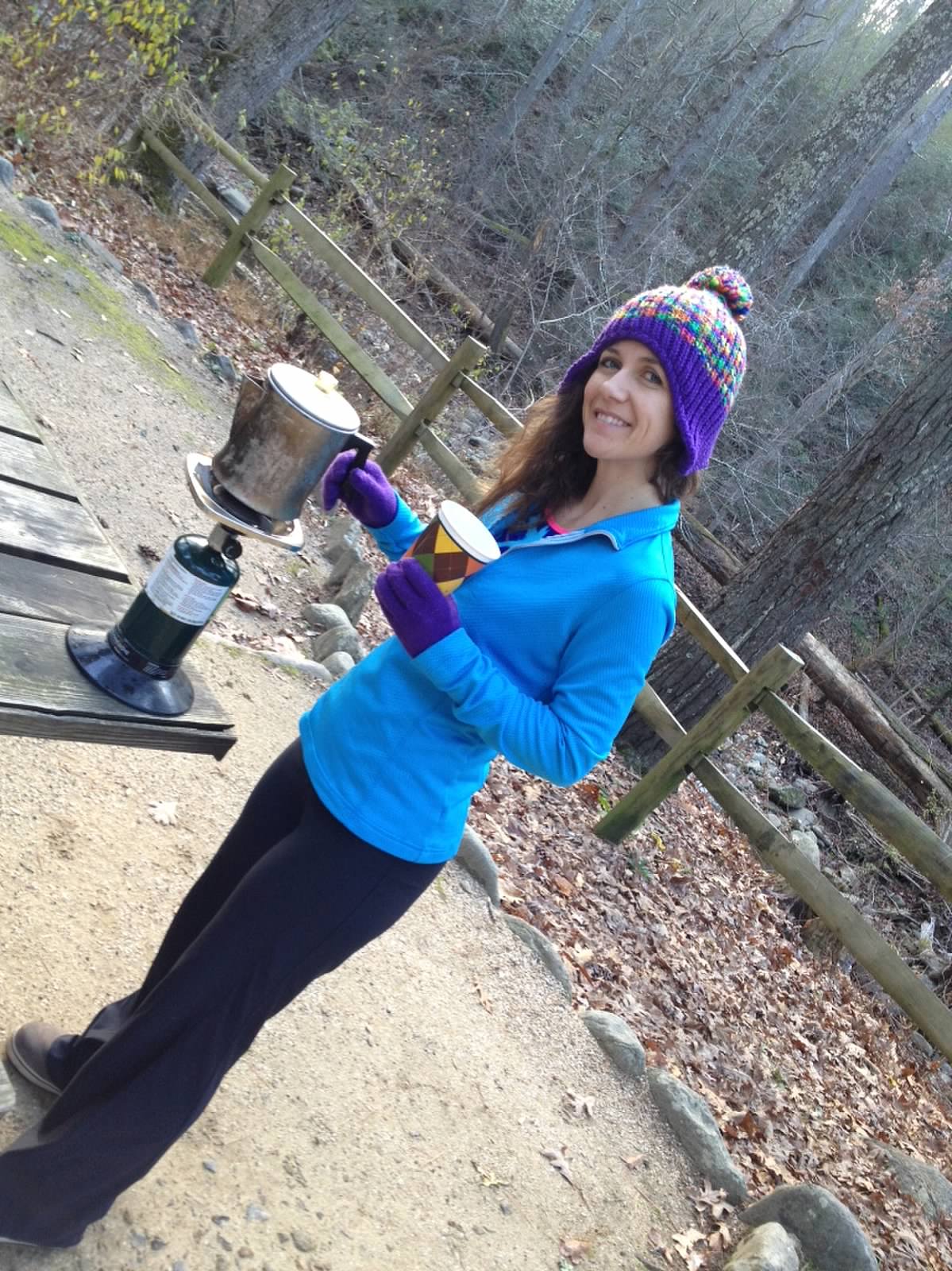
That’s Amy in the colorful hat, holding her camp mug with a smile that has something to do with the coffee she’s just made. Behind her on the picnic table is the entire camp kitchen: a small propane canister with a single burner screwed on top, and a metal pot sitting over the flame.
That’s it. That’s the system.
My dad used this same setup when he took me backpacking in the mountains. He would freeze fajita steaks at home, pack them into his backpack solid as bricks, and by the time we reached camp they’d thawed just enough to cook. Single burner, one pot, a fire going. That was the meal.
I have been using this approach for over 40 years.
The Setup
The burner: A single-burner propane camp stove, the kind that screws directly onto a small propane canister. Available at Walmart for approximately $20. I have bought versions of this stove at various points over the decades and they are all essentially the same tool. Simple, reliable, compact. The canister, the burner, and the pot all store nested together inside the pot itself.
The pot: One metal pot. This is not a limitation — it’s a feature. You can boil water, heat soup, cook pasta, warm a can of stew, make coffee, and reheat leftovers all in the same vessel. The fewer pots you’re washing at a primitive campsite, the better.
The technique for cans: A small amount of water in the pot before you add the can’s contents. This prevents burning and distributes heat evenly. Simple enough that it doesn’t need to be called a technique, but the kind of thing you figure out in the field and never forget.
The Food
Pop-top cans. Things that don’t spoil. Nothing that requires refrigeration below the ice line.
The rule I operate by: eat what you open, in the same meal. No half-cans stored in the fridge, no leftovers to manage, no food waste on a trip where waste is more complicated to deal with than at home. Open it, heat it, eat it.
Stew. Soup. Beans. Canned salmon or chicken. Things with enough calories to fuel the miles you put in during the day. Not gourmet. Not sad. Just food, efficiently.
The ice block system: This is the one where people look at me like I’ve invented something, but I didn’t — I just stopped buying bags.
Ice blocks — the kind you freeze yourself in a container, or buy in solid form — last dramatically longer than loose ice or ice bags. A solid block melts from the outside in. Loose ice melts from everywhere at once. In a cooler with limited drainage, ice blocks will hold cold two to three times longer than an equivalent amount of bagged ice.
The other thing: when the ice melts, you have clean water. I’ve been in situations where I needed it. Dehydration on a long run, the water filter left in the car, a longer day than expected — cold water from the bottom of the cooler has solved that problem more than once. The ice is not just a cooling mechanism. It’s stored water.
Coffee
Coffee is not optional. This is a hard constraint around which everything else is organized.
The percolator pot fits over the single burner. The coffee goes in, the water heats, the result is coffee that tastes like it was made at a campsite, which is the best way it tastes. There is no simpler system that produces actual camp coffee. Instant is an option I understand intellectually and reject personally.
You’ll figure out your own version. The important thing is that the system is simple enough that making coffee in the morning requires no decisions and no setup — you fill the pot from the water jug, you light the burner, you wait. The smell is part of the point.
What Dad Understood
Frozen fajita steaks carried in a backpack is the kind of meal planning that only works if you’ve thought carefully about what you actually need versus what you think you need. The weight of the frozen meat is offset by the simplicity of the meal at camp. One pan, one fire, one meal. Done.
He wasn’t trying to be minimalist. He was trying to be practical. The mountains were far from the grocery store and there was no way to keep anything cold on the trail except by the ice that was the meat itself. So the meal and the cooling system were the same object.
That’s the principle behind all of it. Every piece of gear that serves two purposes is one piece of gear you don’t have to carry. The ice block is the cooler and the emergency water supply. The one pot is the cooking vessel and the washing basin. The camp chair is the outdoor living room.
Less gear, more camping. Same food. Better coffee than most people make at home, honestly — because you’re drinking it outside.
Camp cooking doesn’t have to be complicated. Neither does finding the right spot to cook it — Trek4Free’s free camping map has you covered.