Where Dad Was Standing, There Was Now a Grizzly
Where Dad Was Standing, There Was Now a Grizzly
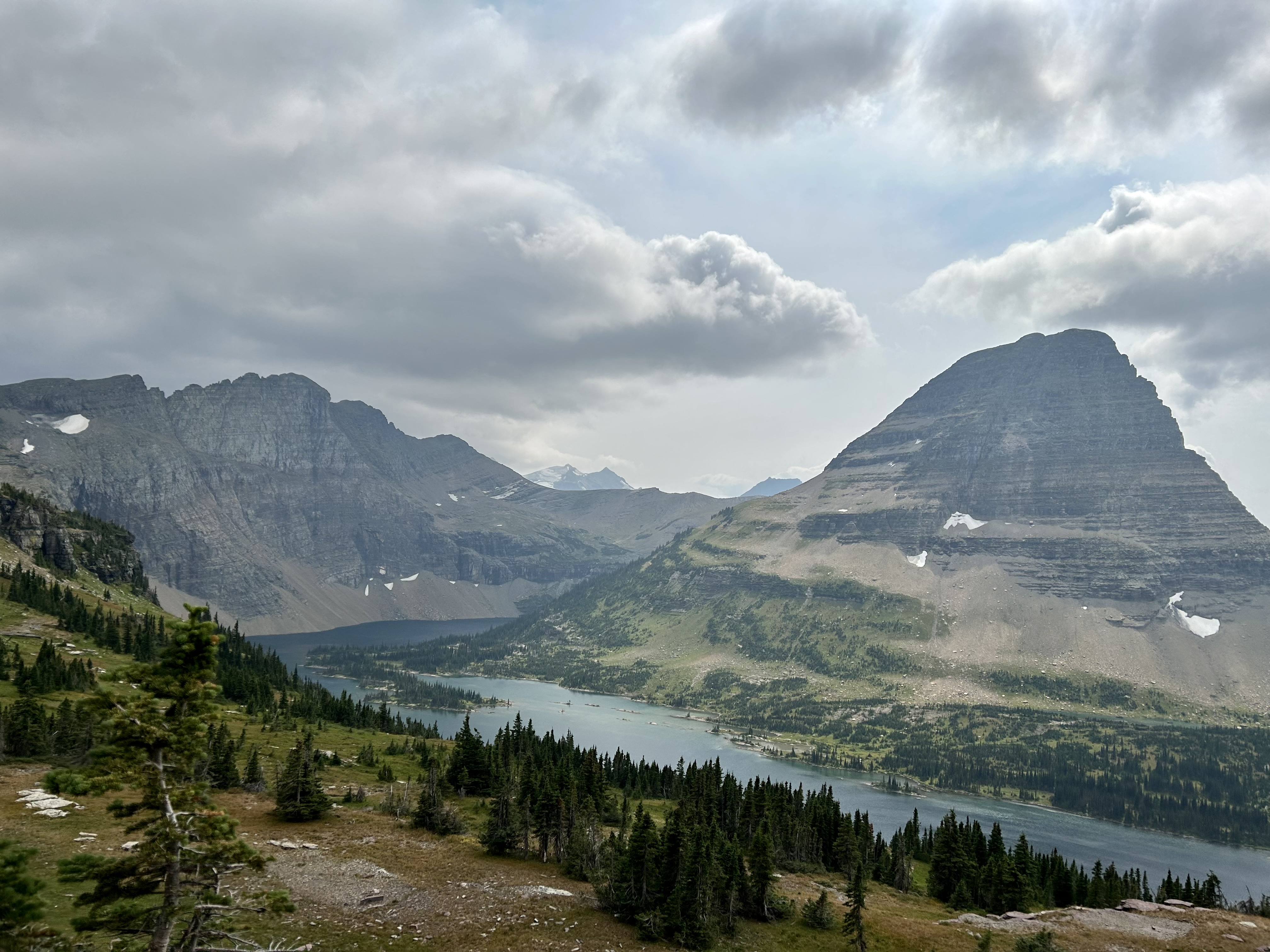
We took three generations on the Highline Trail. My daughter, my wife Amy, and my dad. The Highline is one of the busiest trails in Glacier National Park — an 11.8-mile traverse along the Garden Wall at 6,500 feet with views that make grown people stop mid-stride and just stand there. We’d come in on the park shuttle, which created its own small concern: bear spray accidents on the crowded shuttle buses are a documented problem, and navigating that with a full canister while everyone shuffles through the aisle was the thing I was thinking about as we got off at Logan Pass.
It was not the thing I should have been thinking about.
The Most Trafficked Trail in Grizzly Country
I want to be honest about my headspace going into this hike. We had spent time in genuine backcountry before this — trails where you move carefully and quietly, where bear awareness is constant, where the preparation feels proportional to the risk. The Highline Trail is different. It is busy. Busy enough that our biggest challenge, I assumed, would be trail congestion and parking logistics — not an actual bear.
This is the trap the Highline Trail sets. It looks managed. It has a visitor center and shuttles and interpretive signs. It is also in the middle of some of the densest grizzly bear habitat in the lower 48 states, and the bears do not consult the park schedule before deciding where to be.
Word came down the trail the way it always does: from other hikers, excited, moving faster than they should. A grizzly had been spotted. Close. Recent.
The Fracture
My daughter and Amy heard this and made a decision that I would describe as enthusiastic and my dad would describe as insane: they wanted to go see it. Not away from it. Toward it. This is apparently a thing people do — hear that a large predator is nearby and increase their proximity to it voluntarily.
My dad, who has decades of backcountry experience and was, at that moment, the wisest person in our group, turned and walked the other direction.
I stood between these two departing factions like a man watching a tennis match, unable to stop either ball.
The group that went toward the bear moved out of voice range quickly. I kept visual contact — or tried to — while also watching my dad, who was retreating at a pace suggesting he had additional information the rest of us lacked.
Then I looked back at where my dad had been standing.
He was gone.
The Bear
In his place was a grizzly bear. Not a distant shape on a ridge. Not something you needed binoculars for. A large, brown, close grizzly bear, exactly where my dad had been a moment before.
I have a video of this bear. The video does not capture what it was like to be there. The photos are blurry and inadequate. What the camera cannot convey is the scale of the animal relative to the trail, the way everything else stopped, the complete recalibration your brain undergoes when the thing in front of you is unambiguously apex predator and you are unambiguously not.
I began trying to signal to my wife and daughter, who were still moving away up the trail. I used what I hoped were clear and urgent hand gestures communicating “stop, come back, there is a bear, not slowly, now.”
My wife saw me gesturing and interpreted it, she later told me, as me being annoyed with them for running toward the bear. She moved back in my direction at roughly half speed, with the energy of someone who is being called back before she was ready to be called back.
The Mistake
When she got close enough to actually see what I was pointing at, the situation clarified immediately.
This was my mistake: at that distance, she could see the bear, which meant she now wanted the rest of the group to also see the bear, which meant instead of two people moving away from the situation we now had everyone moving toward it.
They came back. Toward me. Toward the bear.
The bear had taken a position on the high ground above the trail. Traffic had stopped. The bear was between us and the most direct route back down the mountain. We had our bear spray. My daughter had the presence of mind to ask me to make sure it was ready.
Then she asked the question.
“What do we do if it charges?”
I answered honestly. We are in its domain. If it decides to charge, we use the bear spray and hope. There is no guardrail here. There is no emergency button. The park’s wilderness is managed but it is still wilderness, and the animal 40 yards above us has no concept of the distinction between us and everything else that moves through these mountains.
I watched that land on my daughter’s face — the moment the bear went from exciting wildlife encounter to actual wild animal in its own territory, with us as the variable it had not yet decided what to do with.
What the Bear Did
The bear was not interested in us.
It worked its way along the slope above the trail, moving methodically, looking for food. At one point it moved a boulder — a large one, the kind that requires significant effort — and rolled it down the slope looking for whatever lives underneath. The boulder reached the trail. Traffic scattered. The bear continued looking for bugs or worms or whatever it had decided that rock was covering.
This is what a grizzly bear actually does. It goes about its business. It is not performing for observers. It is not aware of being impressive. It is just large and capable and completely indifferent to our presence, which is both the most comforting and most unsettling thing about it.
Once the bear moved higher up the mountain and out of the immediate corridor, we moved. Quickly.
Dad Was Fine
He had run down to a park ranger, who had come back up the trail with him. The ranger was there doing what park rangers on the Highline do regularly — managing the behavior of visitors who, in the presence of a bear, make decisions that are not in their best interest. People at national parks do not always act the way they should around wildlife. The ranger was protecting them from themselves.
Dad had made the right call from the beginning. He processed the situation correctly and responded correctly and was annoyed with the rest of us in a way that I thought was entirely fair given the circumstances.
We have the video. We have the blurry photos. They don’t come close to capturing what it was like to stand on the Highline Trail and watch a grizzly roll a boulder, knowing that the egress behind us was temporarily occupied by the thing itself.
Some experiences don’t compress into images. This is one of them.
The Highline Trail is one of the premier hikes in North America — and legitimate grizzly country. Carry bear spray, know how to use it, and read the park’s current bear activity reports before you hike. The bear encounters are part of what makes Glacier extraordinary.